
Bathing in Language—Words as Sense and Sensation
Actor, producer, and director Alon Nashman discusses World Play, an ongoing series of readings performed in multiple languages around a theme, and the pleasures of deep listening.
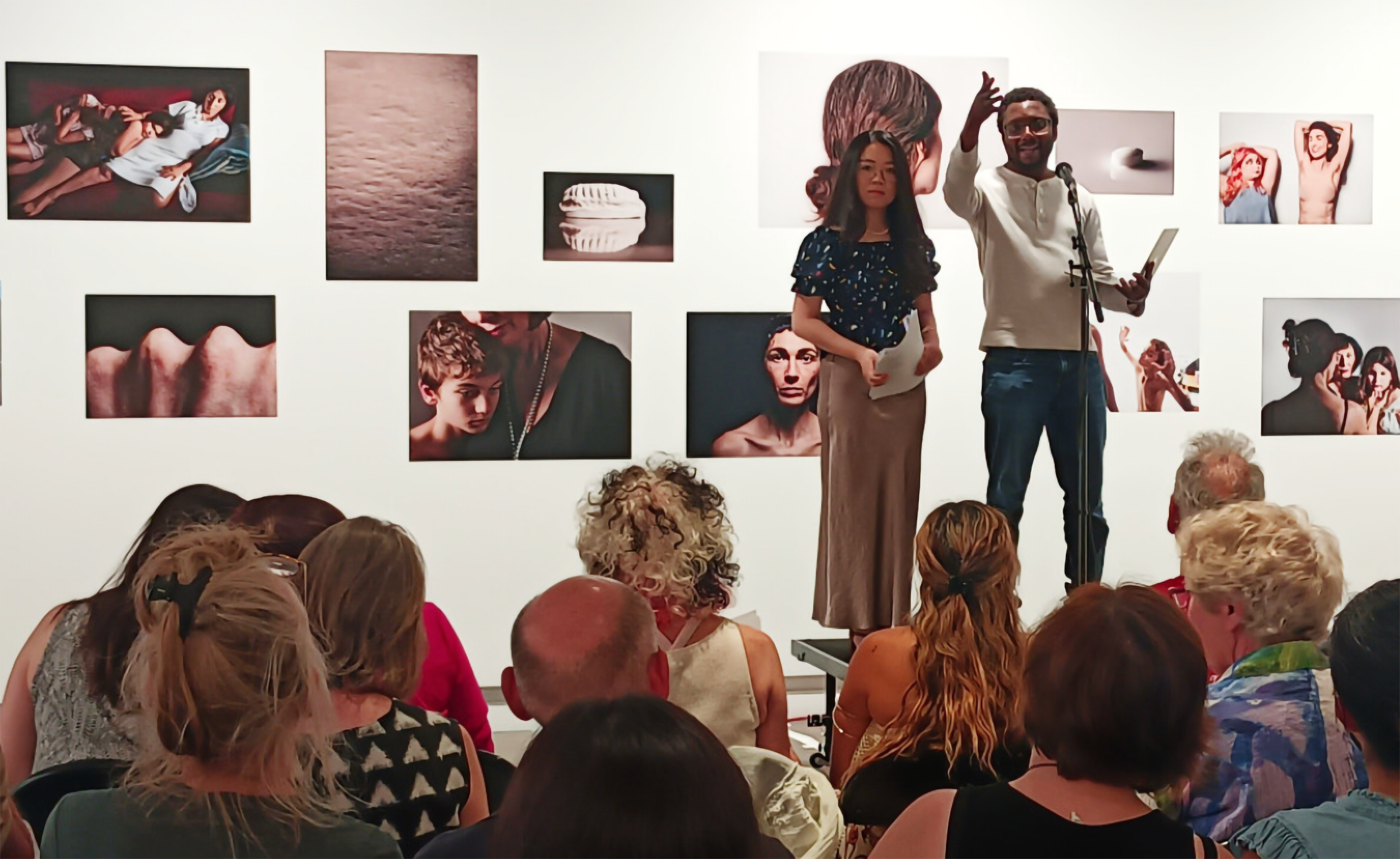
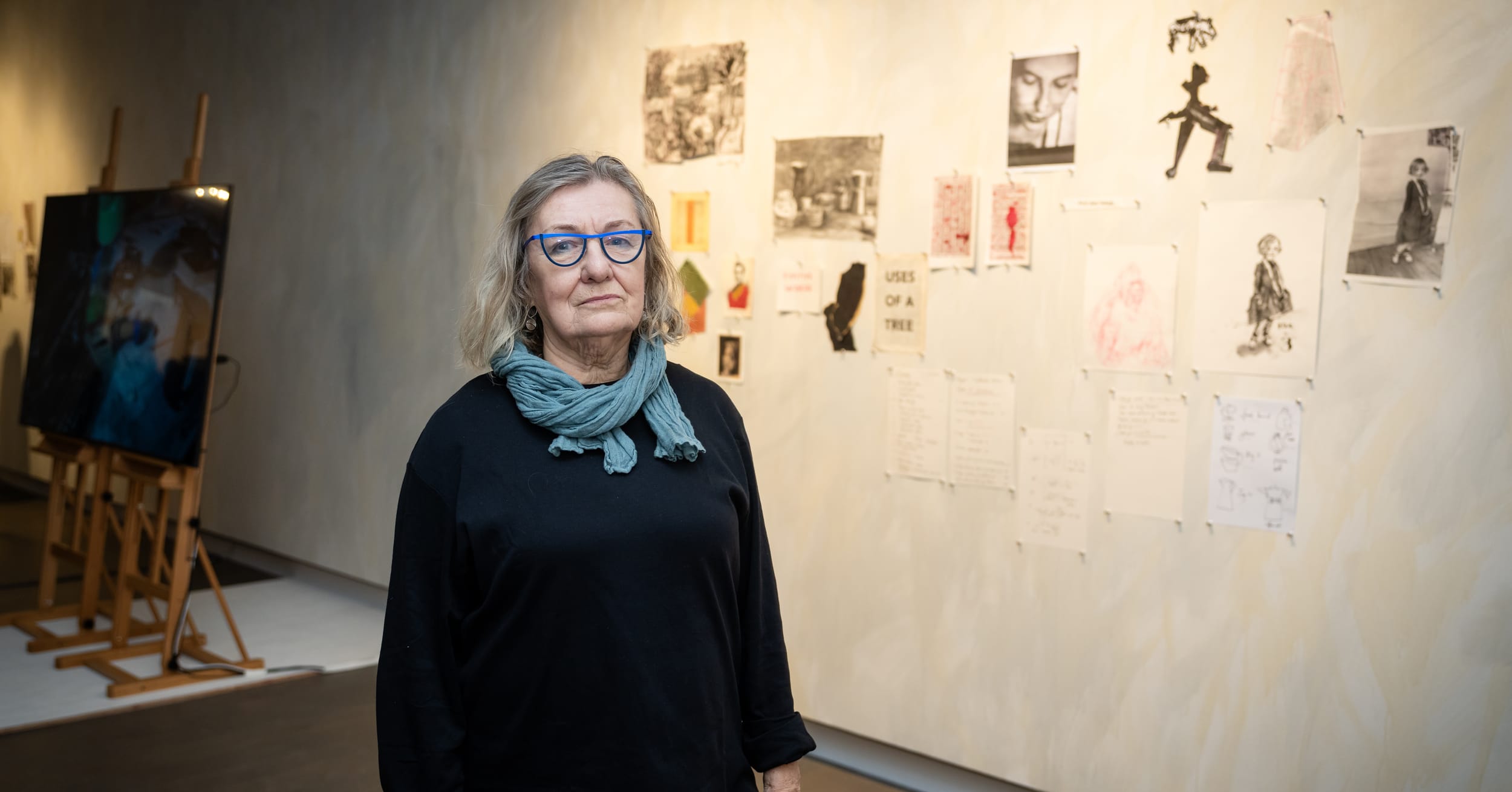
World Play is an invitation to step into language as a kind of living and borderless conversation. Curated by actor-director Alon Nashman and presented by Koffler Arts, the event brings together a selection of texts, read in their original languages, around a particular theme such as Borders, Birth, or Trees—the last one being the subject of the next World Play, happening Monday, February 2 in the mezzanine outside the main gallery. (Admission is free, but reserve a seat here. )
In a city where over 200 languages are spoken, World Play not only serves as a celebration of Toronto’s extraordinary linguistic and cultural diversity, but provides a deep immersion into the pleasures and textures of language itself. “There is already baked into the pure sound of language a kind of resonance,” says Nashman, “which can convey a great deal. Studying that, or putting oneself into a situation where you’re just taking it in, through deep listening, really is to enter a new realm of human interaction.”
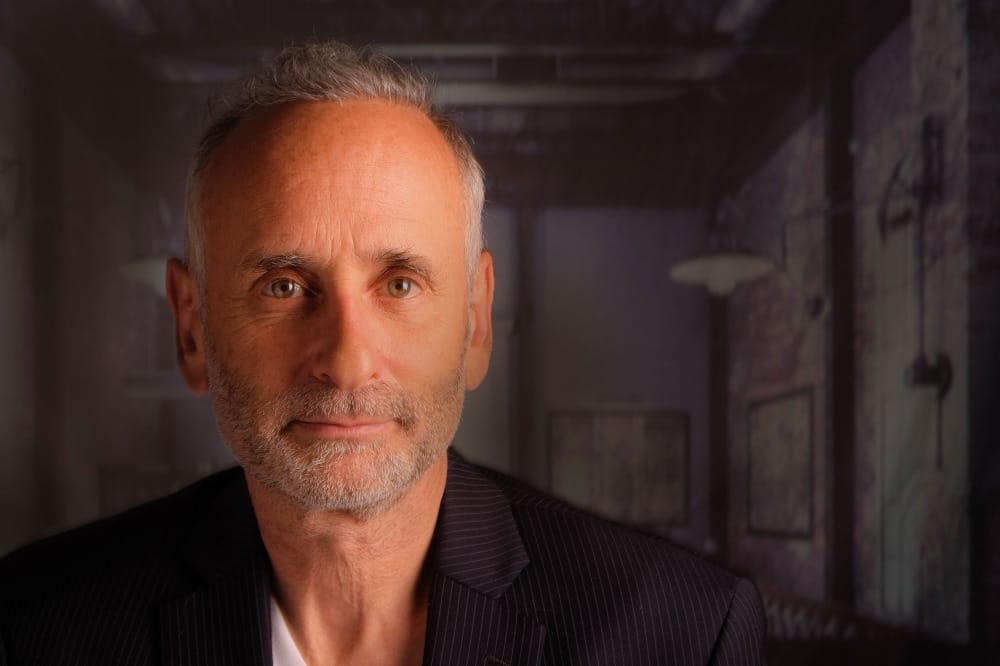
Alon Nashman is a Toronto-based actor and director whose work spans classical theatre, contemporary plays, and interdisciplinary performance. Whether as a performer or director, Nashman brings an adventurous, collaborative spirit to the stage, consistently blurring the line between tradition and experiment.
Arcade recently spoke with Nashman about the inspirations behind the event, the idea of phonaesthetics, and what’s surprised him most about the ways Toronto audiences have engaged with World Play.
Where did the idea for World Play come from?
We were inspired by a little theatre in Venice, Italy, that organized this bimonthly gathering of language speakers. Venice, of course, is an international city, with people living there who come from all over. They did an evening that coincided with the Biennale, and to be honest we just stumbled across this event that’s an ongoing thing.
The theme that night was loneliness. I remember this because the English speaker quoted from “Eleanor Rigby”.... all the lonely people, where do they all come from? There was such a wonderful mystery to the night. All of the texts were read in their original language, then translated into Italian, which I am not very conversant in. So I understood very little. I understood the French and the English, but otherwise it was just hearing the sounds. Still, there was a profound connection between all the readings. Somehow there was this thread and this bath of language, not as meaning in the literal sense, but as sensation.
As much as Venice is an ideal venue for something as international and multicultural as that, we thought that Toronto is actually the exemplar city for where this kind of event could take place. So we got to scheming about World Play.
Elsewhere, you’ve alluded to this idea of phonaesthetics—the pleasantness, or not, of certain word sounds. Is that something you were already aware of when you encountered the event in Venice?
That word was new to me. I think it was Josh Heuman at Koffler Arts who first pointed it out to me. It’s a fascinating branch of linguistics and the science of language, that there is already baked into the pure sound of language a kind of resonance, which can convey a great deal. Studying that, or putting oneself into a situation where you’re just taking it in, through deep listening, really is to enter a new realm of human interaction.
It makes me think of French thinker Roland Barthes and his book The Pleasure of the Text. The idea that a text can elicit a physical, or even erotic, response.
There is pleasure. World Play has been described as a kind of wine tasting of language, but I think that that’s also a little bit imposing. You know, a wish for all of our experiences to be lovely. Especially when we’re dealing with some topics that are more challenging, there can be harshness, there can be a triumphalism, or bitterness. All of those personalities can also be conveyed in this… chocolate box. But it’s not all sweet.
Why was it important that the texts you draw upon come from a variety of mediums or formats or genres. They can be song lyrics, prose, or philosophical in nature.
As we were conceiving of this, it was important that the texts not necessarily be literature, not necessarily high culture. We’re really interested in a whole bunch of different refractions of the theme. And we really wanted people to draw on what was most resonant for them as they considered the theme.
For example, we had the second gathering of World Play on the theme of borders. And this great Armenian musician and composer remembered a very popular song that was sort of the beginning of the affirmation of Armenian culture. A song his mother loved, a song that was played by one of his heroes. But it’s a ditty, you know, and it dealt with borders in this sense of drawing a borderline right at the beginning of the celebration of Armenian culture after years of repression. We also had a Greek opera singer who had three songs of exile. Two of them were essentially laments. And then one was like longing to return, but also celebrating the experience of living Greek elsewhere. That same night there was this very rich and complex Hungarian poem that was an epic written by the poet laureate of Hungary.
So there’s not only this variety of languages, but a variety of modes of expression. Also that night, a Ukrainian reading from a piece of journalism, an incredible account of wartime and shifting borders in the last few years. And this journalist had been killed, making the reading a memorial in a certain sense, for her and her capacity to chronicle the horrors of the situation there. So, yeah, some of it’s immediate, some of it is classic, and some of it is high culture, some of it is pop culture.
Given your career in theatre and performance, I presume that language is something you’ve had to think about a lot. Did that shape how you conceived World Play?
I am drawn to readers that bring some sense of theatricality to it. And I think it’s important that we mix it up a bit. At the next event there’s a Korean speaker who is also a phenomenal musician, and she asked if she could accompany herself on the cello. We said that would be all right. These more multifaceted modes of expression are very attractive to me because the theatre is that point of convergence of so many art forms. And it also gives the evenings an extra pop.
You said earlier that you’re not so conversant with Italian. How are you with languages generally?
I would not say that I’m a master of language. I think that I’m a decent mimic of accents, but that’s also not been a big part of my career. There was one show where I actually had to speak German. At the time I didn’t know much, but I learned phonetically, not grammatically, with some level of understanding so that it was emotionally consistent with the words. One night at the stage door, there was an older German woman waiting for me. She said, “You are speaking very interesting, a lot of German in the play. Are you actually from Germany?” I was so chuffed. I said, “No, I learned it all phonetically.” And she said, “I could tell.” So that’s an indication of where my linguistic skills lie.
As for the significance of putting on World Play in a multicultural city like Toronto, where so many languages are spoken, is there anything that has surprised you about the audience reaction?
What has struck me, and this has been consistent with all three World Plays we’ve done so far, is that the readers form a bond I never anticipated. At the end of the evening, they always stick around. They want to talk to each other, they want to compare notes. They’ve stayed in touch with each other through group emails, that sort of thing. I think there is a real hunger within Toronto to get past these sorts of borders we have around the Portuguese bar and the Korean restaurant and the Filipino cultural centre, that people actually are so curious to know more about each other, and expose themselves to a wider audience.
Another surprise was a very accomplished, Broadway-level performer of Vietnamese origin who was practically in tears because she was reading and speaking in her language publicly for the first time. So I think there’s this hidden aspect of a lot of folks in Toronto that they share with their families and their community, but they don’t get to show in public.
So much of the fun that comes out of language has to do with confusion, wordplay, misunderstandings, ambiguity. Did those sort of moments feature at all in the readings?
Sometimes the readers provide some explanation where there is either complexity or confusion built into the language. The last reading was on the theme of light, and a Quebecois woman who is half-English, half-French, read some poems that are not so much bilingual but written in that mix that a lot of people in Quebec speak. It was fascinating because enough folks understood enough of each language, where the different parts of that schizophrenic sort of expression were reflecting each other.
Is there anything you’ve learned about another culture or language through readings at World Play you weren’t aware of before, or maybe shifted your understanding?
Oh, yeah. There was a Belarusian woman who read an epic poem. It was so romantic, almost a bit rom-comy, but old-timey at the same time. It was just so full of this innocent form of love that it shouldn’t have been a surprise to me at all. But because all we hear about Belarus these days is in the context of its oppressive government, or its alignment with Russia, I realized I had lost sight of the people and the playfulness and the inevitable longings and loves of the people there, and how it’s expressed in the literature. If I can extrapolate from that, there is a phenomenal humanizing effect of encountering not only these languages, but the world views behind them.
Koffler Arts presents the fourth WORLD PLAY event, on the theme of “Trees”, on Monday, February 2 in the mezzanine outside the gallery. (Admission is free, but reserve a seat here. )