
Painting as Blessings: Kalmplex’s Connection to Source
Toronto artist Kalmplex talks with curator David Liss about the inspirations behind his current exhibition at Koffler301 and his worries over the city losing its places of culture and connection.
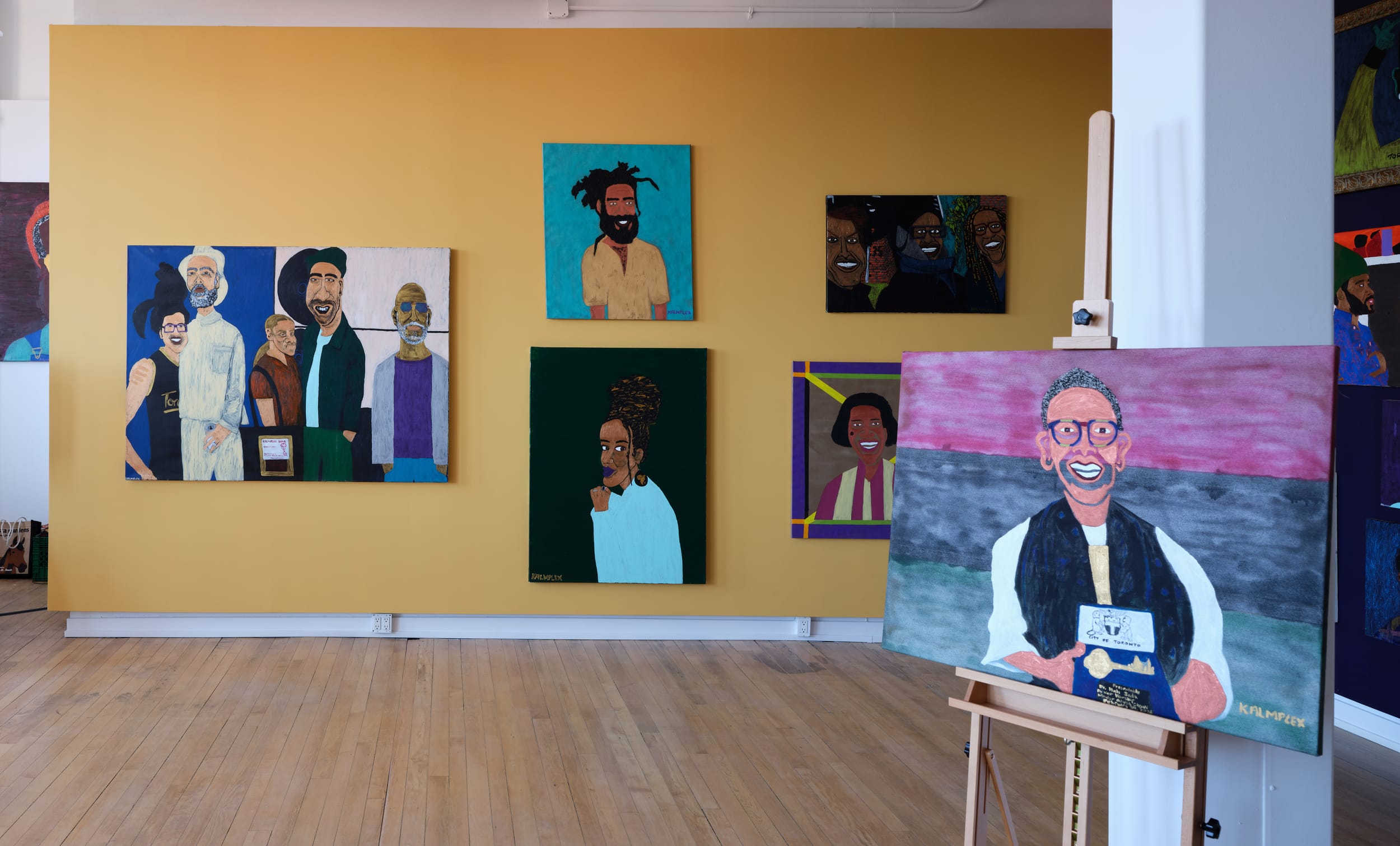
Kalmplex is a Toronto-based multimedia artist whose wide-ranging practice spans painting, photography, videography, and DJ culture, rooted in more than two decades of documenting the city’s underground arts and music scenes. His latest painting-focused exhibition, Blessed and Highly Favoured, recently opened at Koffler301 and runs until May 3.
Born and raised in Toronto to Jamaican and Ghanaian parents, Kalmplex is known for vivid, large-scale portraiture that foregrounds Black identity, community, and cultural memory—often depicting both iconic figures and more personal subjects. Alongside this studio work, Kalmplex has built an extensive visual archive of local nightlife, performance, and creative communities, positioning their practice as both artistic and documentary, grounded in celebration, visibility, and collective history.
On March 29, Koffler Arts hosted a conversation between Kalmplex and the exhibition’s curator, David Liss. The following is an edited transcript of their talk.
I want to start with where the title for this exhibition, Blessed and Highly Favoured, comes from, because whenever I bump into you and say, “Hey, how’s it going?” you always reply, “I’m blessed and highly favoured.” I think of it not only as a greeting, but a way of underlining what I think you’re trying to get at with your work, particularly with your paintings.
True, true. First of all, it’s to give thanks. Akwaaba—akwaaba in Fante means welcome. So thank you for coming into this space. Blessed and highly favoured. It’s a blessing to be alive, to be woken up today, to be here, to just be. And so I give thanks to the most-high creator for bringing us all here together. The energy that you bring is going to shape how this conversation happens.
My paintings are like a blessing. When I’m painting people, it’s me showing love to them. I see the divinity within them. Sometimes they’re wearing a really nice outfit or I have a lot of love for them, and I just want to be able to capture that moment in ways other than photography. I use metallic paint to bring out the melanin and the magic, people’s royal essence. Because a lot of times people who look like me don’t get focused on in the proper light. So I’m here to bring the magic and the royalty back. Like I’m blessing up the space, blessing up the people, blessing up Toronto, because you know, we are the meeting place.
At the opening many people remarked how you painted the gallery walls in a way that really make the paintings pop and stand out. But I think there’s some meaning or symbolism behind those colours, they weren’t chosen because they looked good.
Well, purple is my favourite colour and a sign of royalty. My dad’s Ghanaian and comes from a line of chiefs who are leaders in their community. People come to them for wisdom and stuff like that. So I want to accentuate this idea of royalty as well as bring those colour contexts to representing people.
Then there’s gold—also associated with royalty, but magic and precious metals too. Plus, you know, with purple and gold together, you get Kobe [Bryant], the greatest. I was born just the day after Kobe.
But also I just think white walls are boring. There’s so much that can be done to accentuate by using other colors. If you have the budget why not do something to liven up the space? I like being able to contrast the walls with the colors in my paintings, just to bring more vibrancy. Technically we’re in spring, but it’s still kind of gray outside. We live in a place where eight months of the year the sun’s kind of lacking. It’s kind of like colour therapy, with turntables and music. So it’s like this blessed, healing space.
As for the subject matter, all of the work is pretty much portraits. Some of them are of people we’ll recognize, like Drake and Vladimir Guerrero Jr., but there’s also a portrait of Tim Whiten—an artist and educator who had a profound influence on both of us.
Yeah, he was my teacher at York University, where I took drawing and painting fine arts. It was the first time that I had any teachers who were Black and Tim was my critical-thinking teacher. A great guy and very prolific. Had a show at the AGO recently and he’s represented by Olga Korper Gallery. He’s a man that tells you to make sure you’re connected to source. Make sure your connection to source is strong and don’t ever lose it. Very wise words, I would say.
So a lot of these portraits are of your friends, but then we also have Rihanna.
Rihanna will be my friend in the future.
And Beyoncé?
Beyoncé will be my friend in the future.
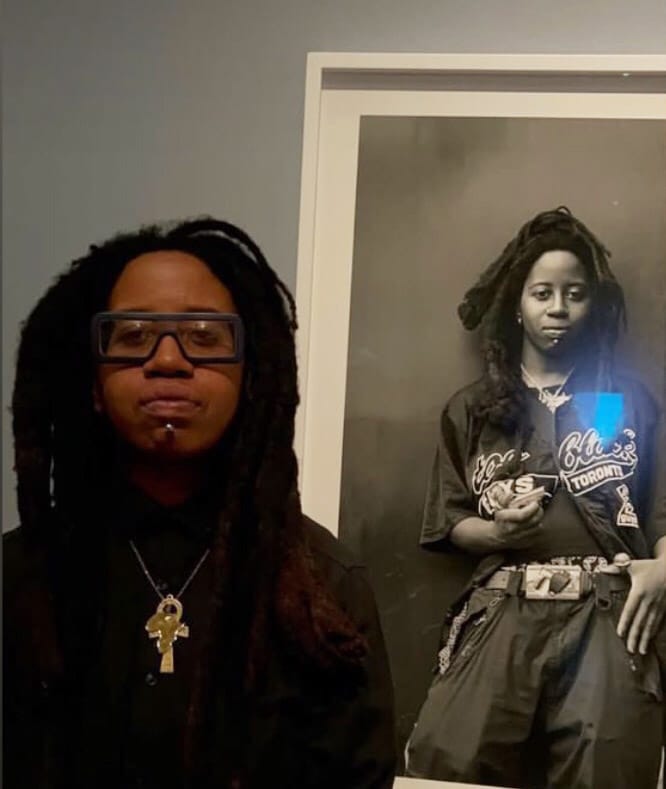
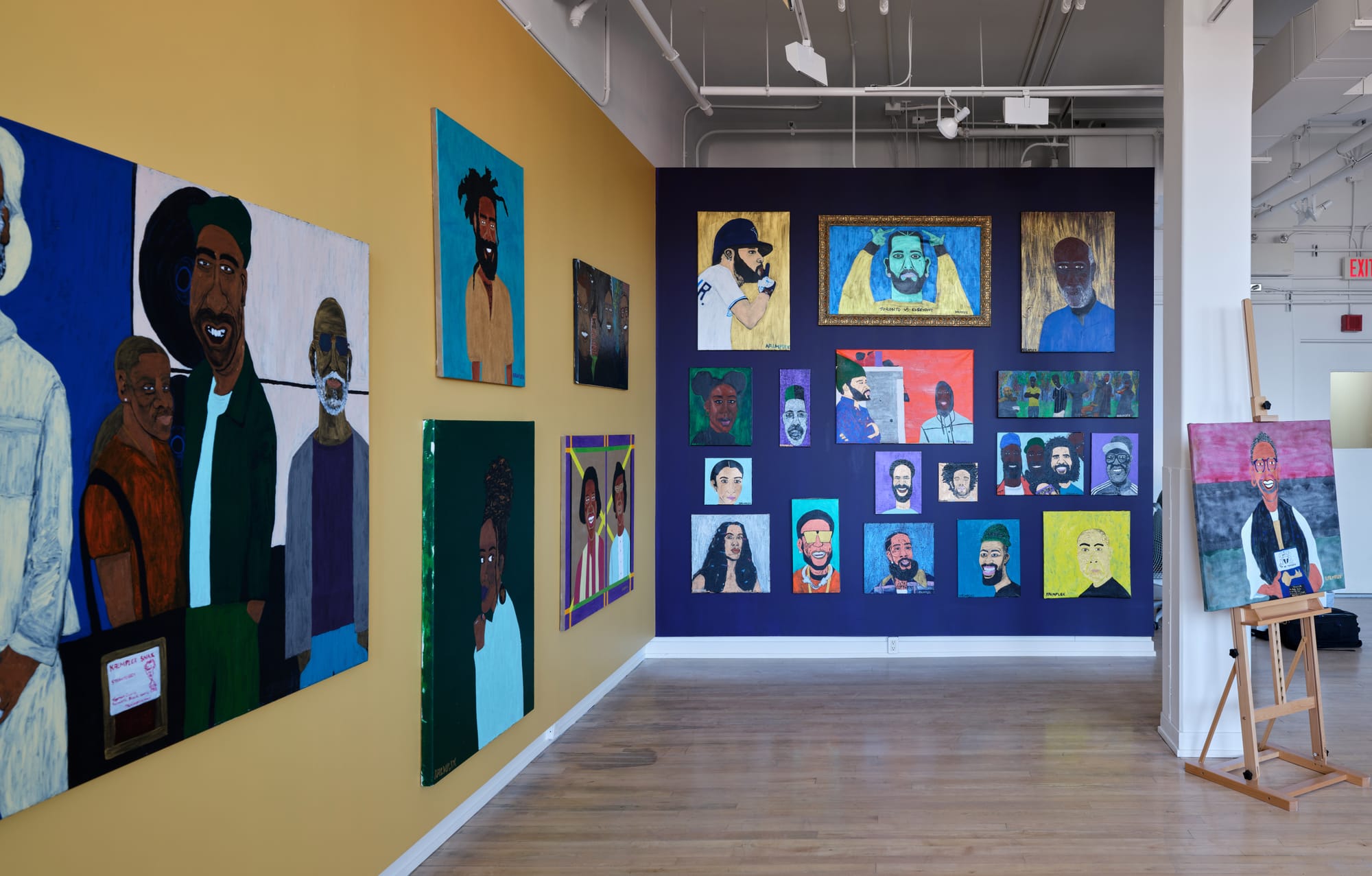
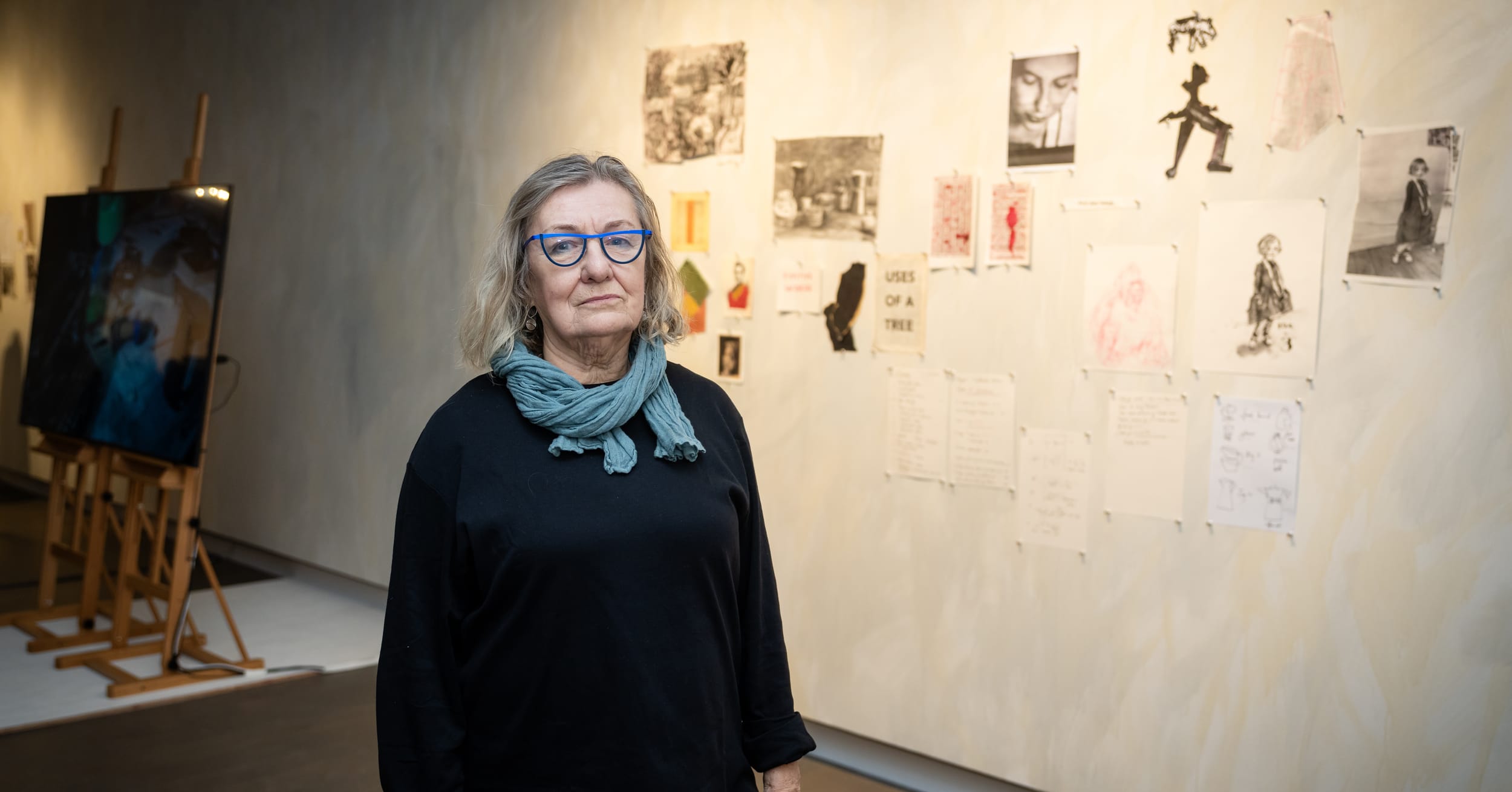
Kalmplex at left and installation view of Blessed and Highly Favoured. (Exhibition image: Jeremie Warshafsky)
But they’re all mixed in there together with your homies, people from your neighbourhood and community. What’s Tim Whiten doing on the same wall as rappers Nipsey Hussle and Gucci Mane?
I think we’re all magical beings. Your bank account or your celebrity status doesn’t matter, we’re all gods, goddesses, demons, devils, fairies. Money is just paper, you know what I mean? Whether you’re poor or middle class, abundance is everybody’s birthright. I believe everyone needs clean water, good food, a roof over their head, and clothes. It’s about treating all people with respect. Maybe we’re not all going to like each other, or come from the same background, or have the same taste in food or clothes or whatever. But we are sharing this earth that we can’t get off of. I don’t know who thinks they’re going to Mars, none of us in this room are going to be invited to that party.
I don’t have to treat you special just because you live in a mansion. I talk to everybody, unless you’re a dick. The point is that we all share the same space. We breathe the same air, drink the same water, so figure out how we can all have clean air and water and build something better than what we have now. We all incarnated here at this time to do something and be a powerful light.
We all come from various villages from all over the world, and we’re here in this meeting place, so how can we build something better, like that painting behind you names of all the different clubs and places that no longer exist in Toronto. Back in the day there was System Sound Bar, there was Element, Fez Batik, Manhattan, Fluid—all these places that no longer exist. Queen Street was lively back then, but now I don’t know. I ride my bike all year round, all the time, I read energy, I feel energy. I ride to four or five places in a day, all over the city. Toronto is not what it used to be like. Toronto’s dead right now.
You think Toronto is dead like that?
For real. When we were hustling our mix tapes outside Muchmusic or on Spadina things were popping. There was Gypsy Co-op, the Bamboo, there was stuff happening. Right now we have more places that are closed and for lease. And there’s hardly any more affordable studio space, rents just keep getting higher and higher.
It’s like all the community spaces are being pushed out, and we’re not congregating and meeting new people who aren’t already in our friend group or don’t listen to the same music. The connection that people used to have isn’t there. Obviously, Covid screwed up a lot of things. I go to art shows and talk to younger people in their early twenties who had to hang out with their parents during these formative teen years. I’ve talked to kids who are afraid to have conversations with people, it’s like they don’t have the social capacity to talk with strangers.
Every time I run into you at an art opening or music show and we have a conversation I always kind of come out feeling positive. I didn’t know there was this whole other side to you.
Haha, I’m a prepper.
Do you see this work then as some kind of resistance? Because to me it seems very celebratory.
I just think there’s a conversation that’s not being had because of COVID. Let’s be real, for several years we got locked down and that changed the trajectory of everything. The youth coming up now are scared to talk to people. I worry about what’s going on—that I’ll open my Instagram and find out someone else killed themselves. So we have to start having these conversations, while also bringing in some positivity.
So my artwork here is this portal of happiness and joy and love so people can come through and get some sunshine in their life and feel it, because maybe they’re not getting that elsewhere.
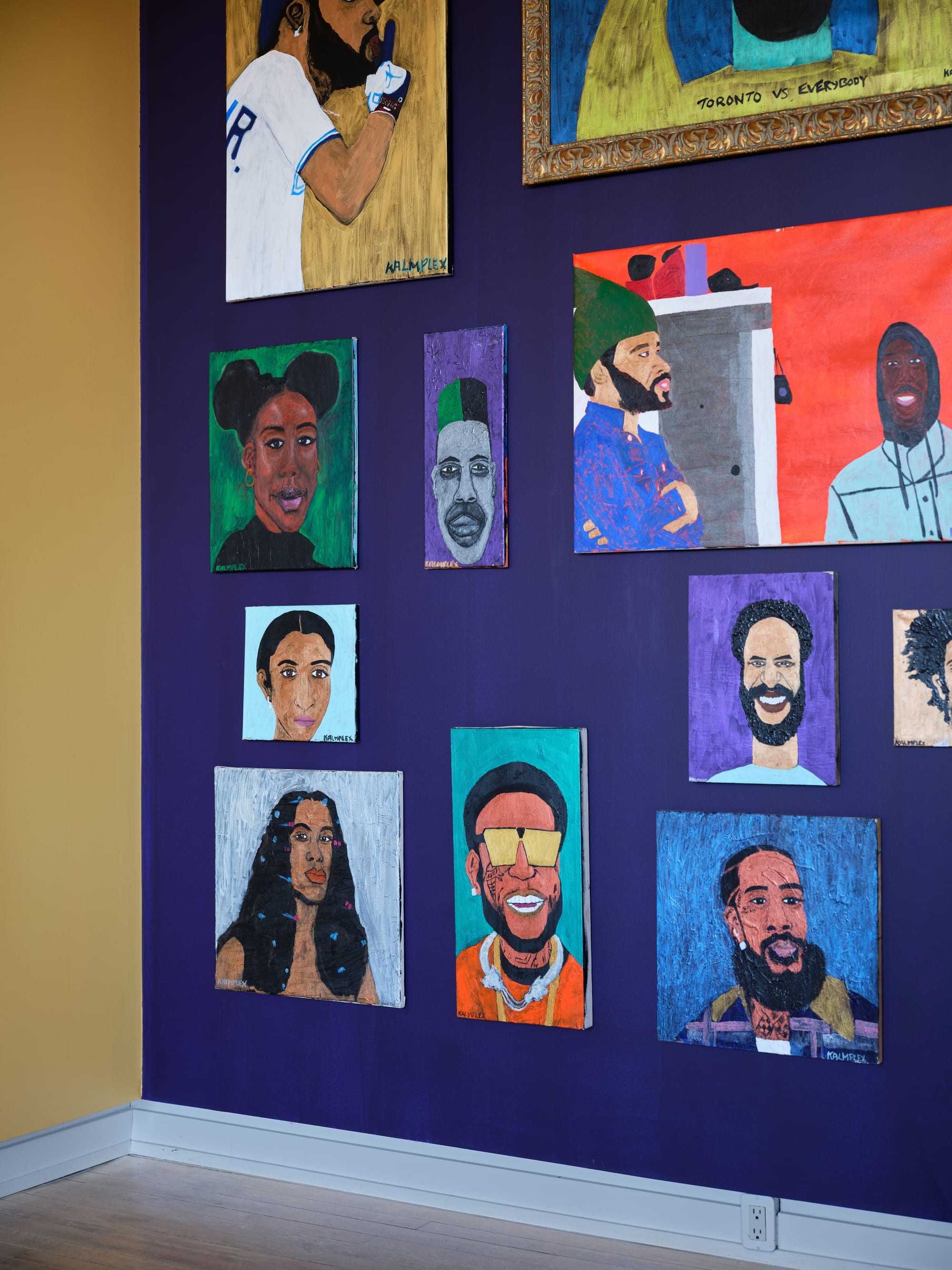
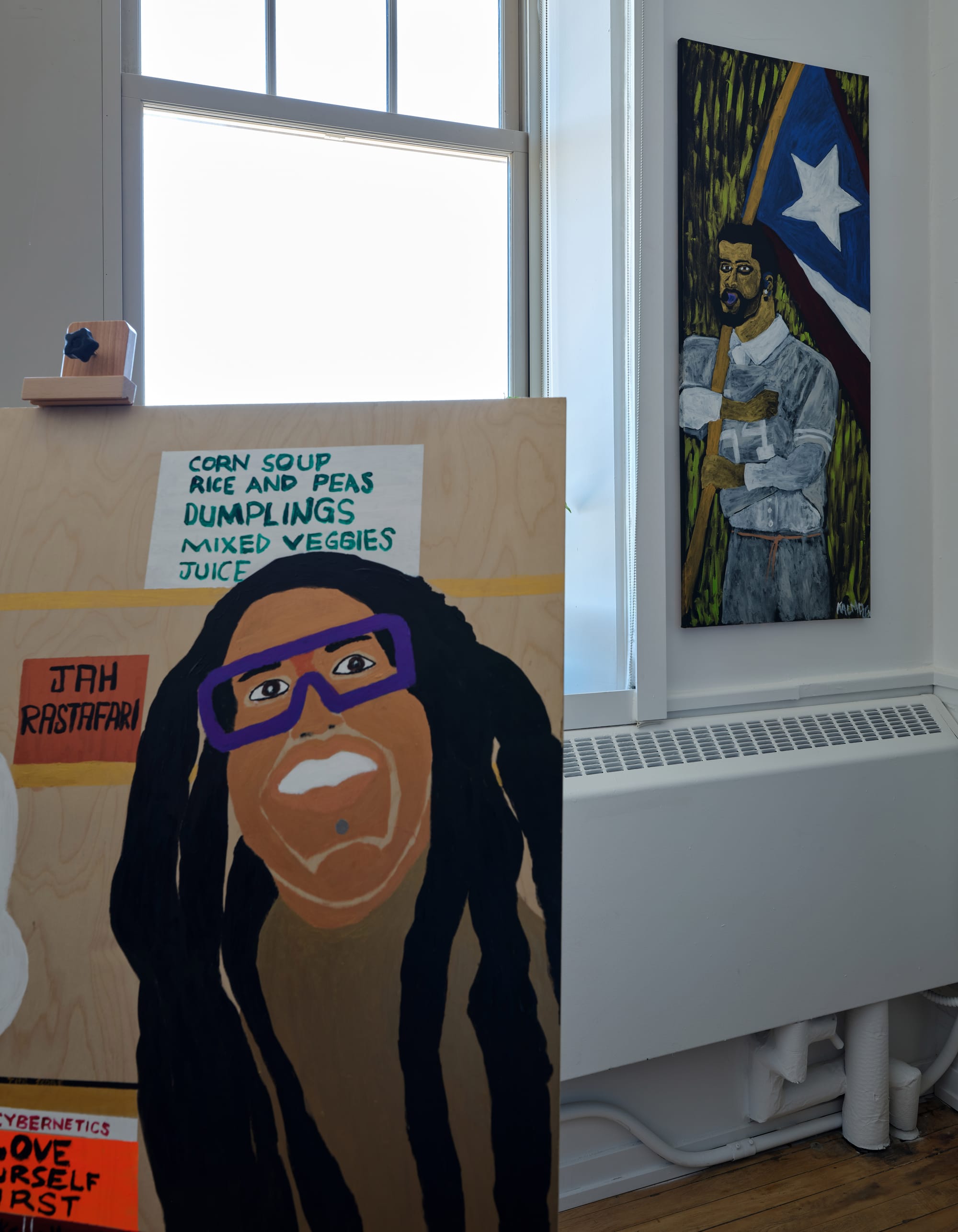
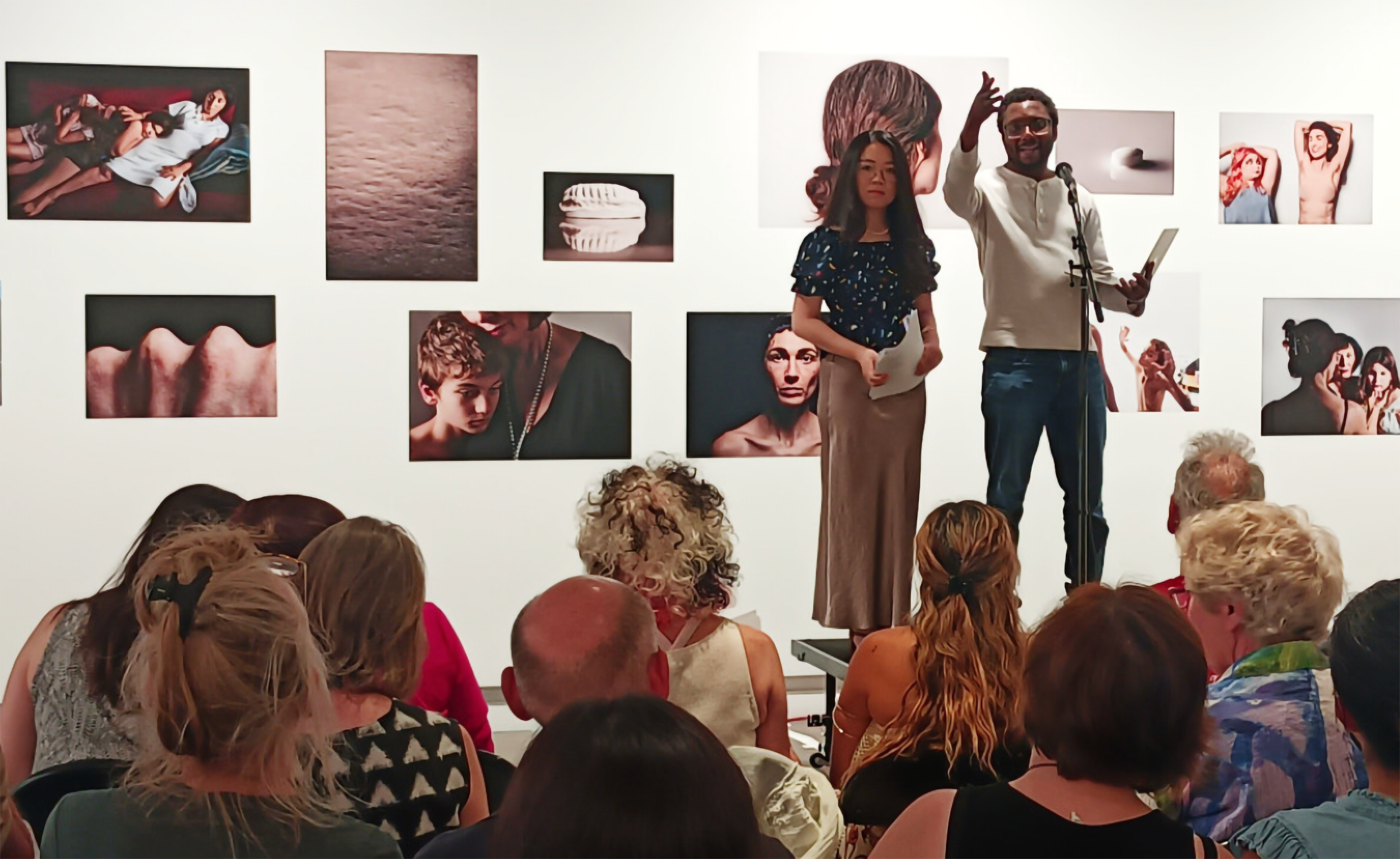
Two views of Blessed and Highly Favoured. (Images: Jeremie Warshafsky)
Let’s talk a bit about the content of the work. I want to know who these people are.
I see Dr. Itah Sadu just walked in from [Toronto bookstore] A Different Booklist. I have a painting that shows when she got the key to the city from the mayor of Toronto. A Different Booklist has been around for years, championing Black authors and Black people in a community space. Every year she leads the Underground Freedom Train Ride on the TTC to celebrate Emancipation Day.
I’m here to celebrate Blackness because we don’t get celebrated. We are not getting the grants, we’re not getting the opportunities. I want to make sure that Black people know we are the original people of this earth, no matter what people want to tell you. And that we are royal. We are divine. We are here to make something of ourselves. The media might want to portray us as one thing, but I’m here to say we have light. We are a blessing to the world.
So when we see these celebrities on the wall next to local people, you’re putting everyone at that same level of divinity?
All equal in the eyes of the most-high. Like I said, all these other things don’t matter—your money, your house, your car—you’re here, you’re breathing, the most-high woke us all up today. So we have a mission today. I might not wake up tomorrow. You might not wake up tomorrow, Today my mission is to hail you up and say, “What’s up?” I’m not here to tell you what to do or how to live your life, but I can talk about my life and give you an example of what I’ve been through. What you take from that is what you take from that.
First of all, you have to love yourself. The last time I was in Jamaica, in 2012, I ran into these two Rasta men, and one of them wanted to tell me this story. When he was younger a woman had accused him of stealing something. The police were called and he was taken to jail in Montego Bay. It was a Friday and the arresting officer had to leave for Kingston. A few hours later, the next officer came in and he asked the Rasta man why he was there. The Rasta Man told him he was accused of stealing, but that he didn’t do it.
The officer was like, “Okay, I’m going to ask you one question. If you get this question right, you can leave. If you don’t, you have to wait until Monday when the arresting officer comes back.” So the officer asks him, out of everyone in your family, who do you love the most? The Rasta man says I’m the youngest of nine kids, plus my mother and my father—that’s 11 people just in my immediate family. Out of everyone in my family, who do I love the most? I love myself the most.
The officer opened the cell and let him out. The Rasta man was like, “I’m free, because I love myself.”
If you don’t love yourself the most, you’re gonna end up in places where you don’t belong. There’s people in this world who don’t have love, whether it’s for you, themselves, or at all. There are obstacles that will happen, but you have to have the love within yourself first so that you know where to be and when to leave, and who to be around and who not to be around.
Because I love myself the most, I show love to my people and people because you’re all my people, you know what I’m saying? People need to know what love looks like, and this is what love looks like from my perspective.
Blessed and Highly Favoured runs at Koffler301 until May 3, 2026.