
The Work of Art, After Death: On Artists Planning Their Legacy
An estate plan might be among the most important works that an artist leaves behind.
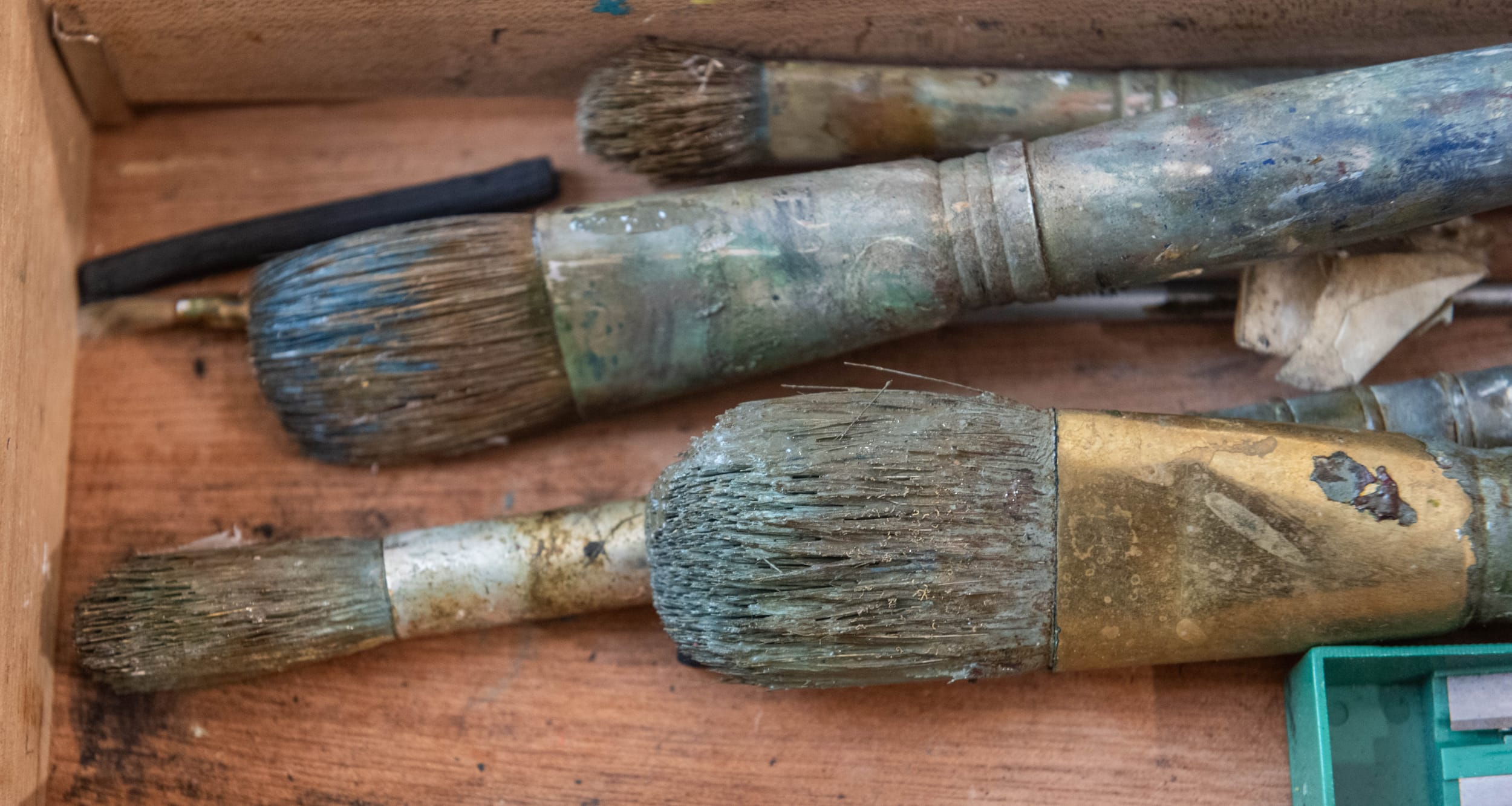
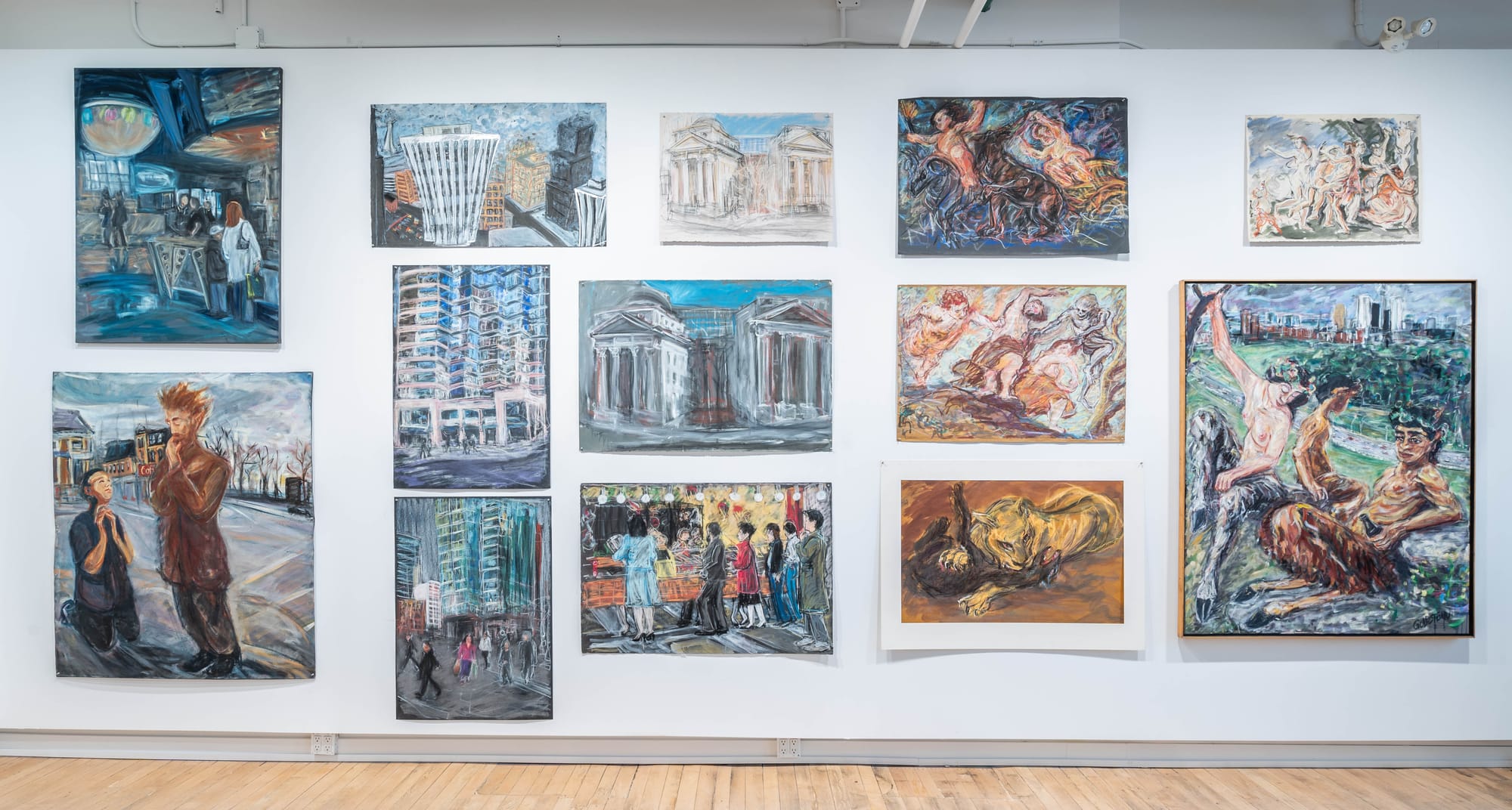
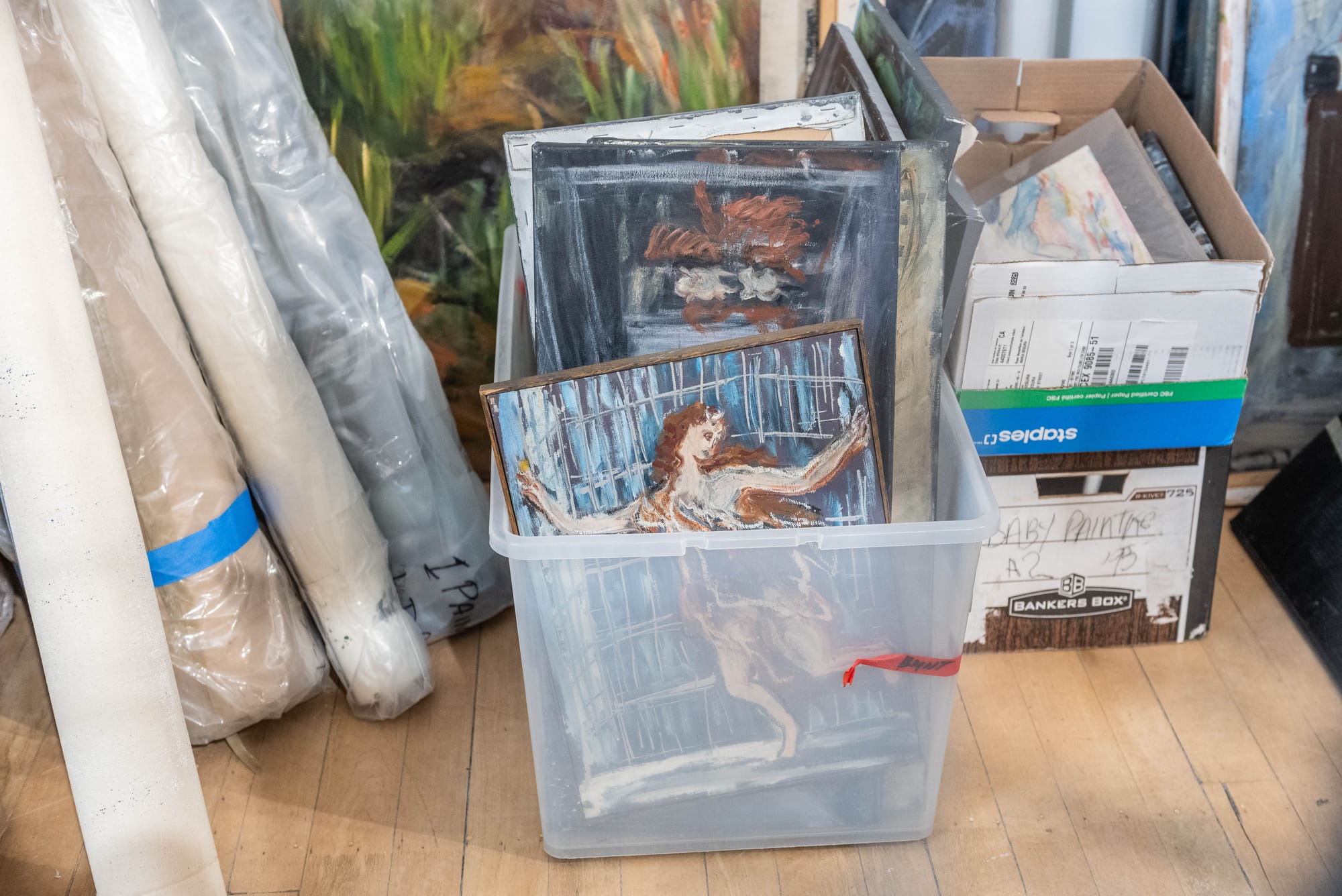
When prolific Toronto-based artist Sybil Goldstein died suddenly from thrombosis in 2012, not only did she leave behind a collection of more than 1,000 works, but the unexpected nature of her death meant that she’d left no will or instructions for what to do with it all.
That was part of the impetus behind the recent Koffler301 exhibition Urban Myths, curated by David Liss, to both showcase the astounding variety of work produced by the co-founder of the ChromaZone Collective, much of it unseen and kept in storage since her death, while also finding it a good home.
At first, Koffler Arts was approached to receive the entire collection as a donation. But without any storage space of its own, the organization’s General Director, Matthew Jocelyn, made a counter-proposal. Why not use an exhibition of Goldstein’s work as an opportunity to give it away? Throughout the run of Urban Myths gallery goers and public galleries were encouraged to put dibs on a work of their liking, to be picked up when the show was over. (There were also works not displayed that visitors could simply leave with.)
As Jocelyn told The Globe and Mail, “In no way are we trying to promote discount art. How do we make this 100 percent respectful and 100 percent honouring the legacy, but recognizing the quandary: It costs a lot of money to store art.”
Goldstein’s story is not uncommon—most artists would rather be immersed in their practice, rather than the legalities of wills and estate planning, and the probably uncomfortable decisions to be made. Plus, death strikes at any age; Goldstein was only 57. But what happens to the work and legacy left behind can make all the difference to how an artist is regarded for posterity, and ensuring their art is accessible to future generations.
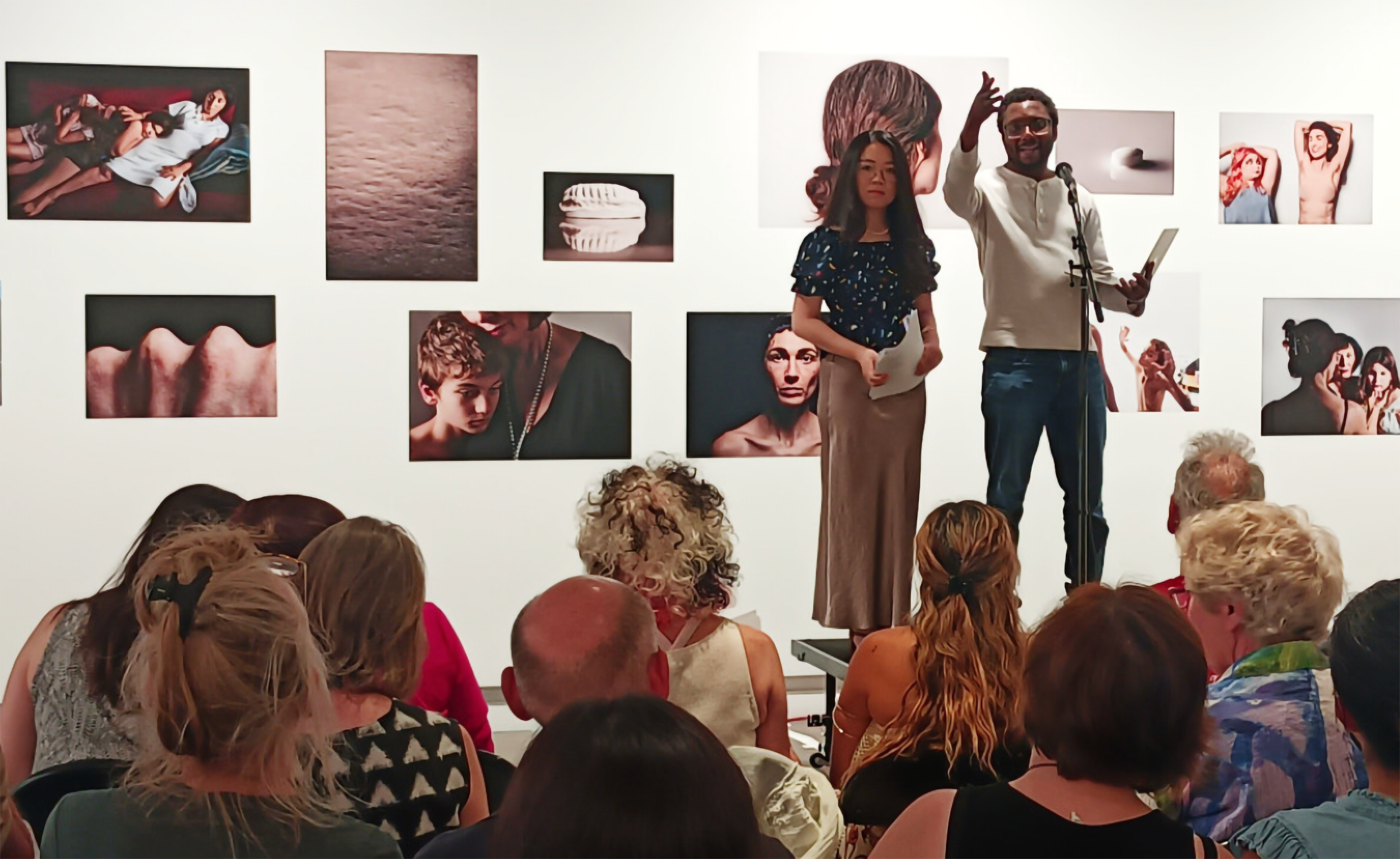
In conjunction with Urban Myths, Koffler Arts invited four artists to participate in a panel discussion on what they’ve done to prepare for the dispersal of their work and management of legacy once they’re gone. Following some opening remarks from Tony Baker, a Toronto lawyer specializing in wills and estate law, we heard from internationally acclaimed multidisciplinary artist Vera Frenkel, winner of a Governor General's Award in Media and Visual Arts in 2005; Toronto-based artist Kal Mansur, whose colourfully translucent acrylic sculptures have been exhibited in Canada, the US, and Europe; Bruce Eves, co-founder of the International Gay History Archive and a 2018 recipient of a Governor General's Award in Media and Visual Arts; and Katharine Harvey, a conceptualist painter and multimedia artist based in Toronto.
VERA FRENKEL
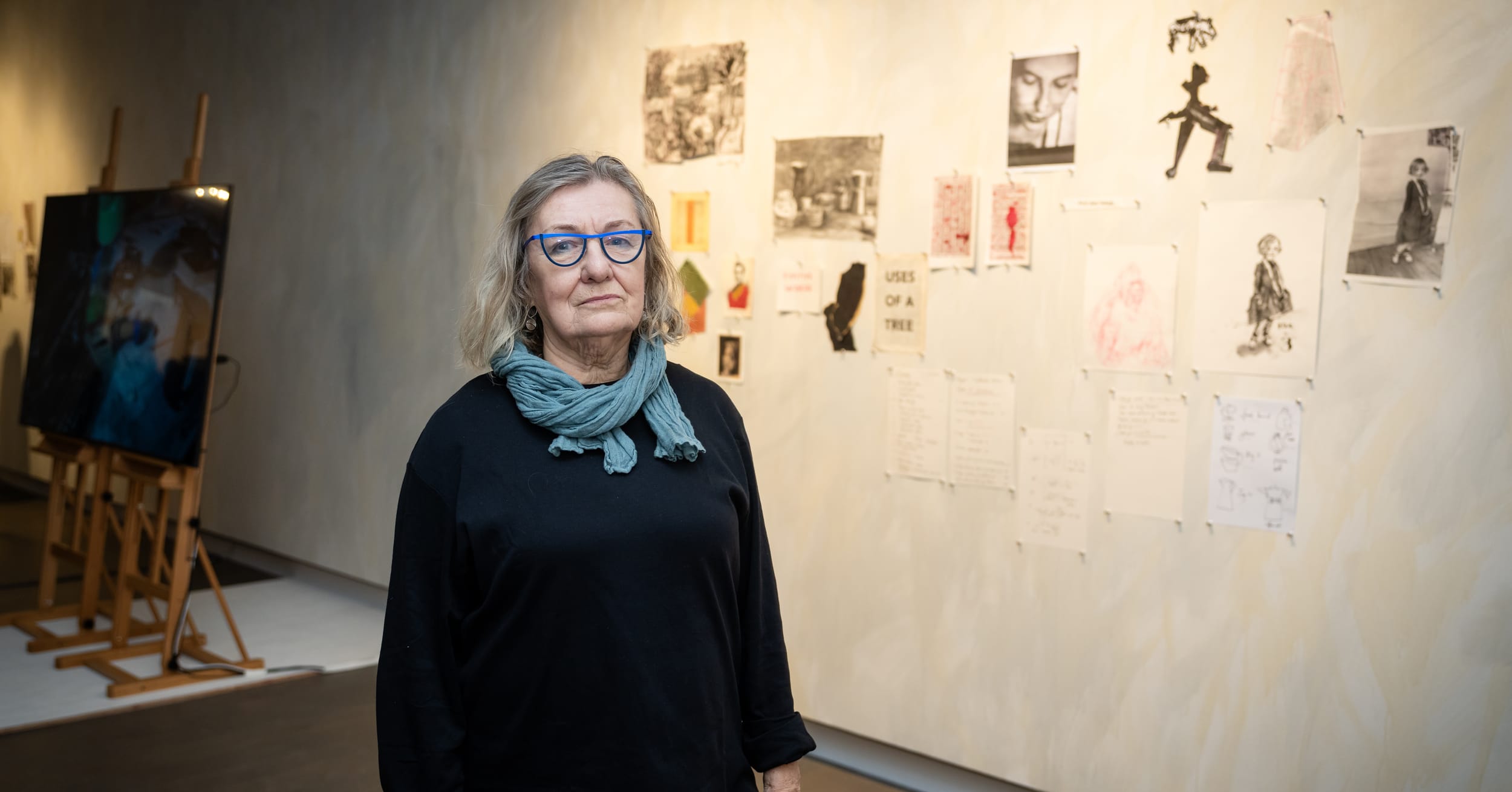
First of all, it’s a privilege to speak in the context of Sybil Goldstein’s Urban Myths exhibition. The impact Sybil’s presence is now having through her paintings is due to the generous way her family is sharing her legacy. For those of us without generous families, or no family at all, thinking about this legacy reminds us that there is much to learn and take care of while we can.
Considering the various attempts I’ve made to make sense of my life and of my practice, let alone make sense of them once I’m gone, it seems I’ve found it hard enough to decipher their meanings while alive. And I have only achieved patches of preparation for my death.
As a multidisciplinary artist in a field of constantly changing technologies, the care and feeding of my work presents ancillary challenges beyond selling, donating, or storing. If it weren’t for a visionary curator at Espace 5 in Montreal, String Games, my 1974 intercity video improvisation would never have seen the light of day.
When Tony says there are questions about the destiny of cooperative ventures, I’m in trouble there—because much of my work is cooperative.
I did do three sensible things, however:
Some time ago, as a gesture of appreciation to Queen’s University and the Agnes Etherington Art Gallery for their exhibitions and acquisitions of my work, rather than any awareness of legacy, I started donating my so-called papers to the Queen’s archives, which included photographs, journals, videos… lots of embarrassing material.
Also, some years ago I made a Will, and from the Will-making outline that Tony has described, I see that I have a primary and secondary Will, one of them subject to probate, whatever that is, the other ready to be acted on. So my artworks and the various things that are of sentimental value are in the secondary will. The government gets much of the rest.
To the extent that I can decipher my two-part Will, it’s clear that I underestimated how feelings and facts can change over time. It’s my good fortune that a key member of the team that drafted those two documents is here today and has offered to walk me through them again.
The third thing I did was to hire an archivist, Cole Anderson, a specialist in preservation and collection management of moving image works. His master’s thesis was called “Video Artists: Creating a Living Legacy”, and the introduction opens with these words:
“This thesis outlines best practices for video artists to document their careers and achievements, while organizing and preserving their life’s work so that it remains accessible long after their death.”
The intro later ends by saying:
“While thinking about death is difficult for anyone, artists can ensure that their work and creative legacy endures by following the advice offered here.”
Who could resist that advice?
So there’s those three things I’ve done: donating to the archives, writing a Will, and having an archivist as my studio assistant—patches of wise things that my geriatrician would approve of.
Lastly, I’ve been exploring ways in which the building that houses my home and studio can be donated for future use as a meeting place for artists, curators, writers and the like. Nobody seems to want to do that with ease and simplicity. It’s a very multi-layered process. Most recently, I’ve discussed options with Erella Ganon and Hannah Fleischer, founders of the Community & Cultural Spaces Trust. They are interested in what I’m interested in, which is providing space for the rest of you to party when I’m gone.
So there have been patches of preparation, but no integrated estate plan. A moving conversation last year with Heather Home, the Queen’s University archivist, and Emelie Chhangur, Director of the Agnes Etherington Art Centre, brought estate planning back into focus—and also described me as an example of delinquency.
I had discovered a forgotten set of Polaroids that documented String Games, a video performance work made half a century ago. We were discussing whether the prints should stay with the artwork, which the Agnes Etherington owns, or go to the university archives.
At one point during their visit, Emily said, with great feeling, that I should consider my estate plan as my most important work of art. Heather agreed. I was very moved by their interest and concern, and I could see that they were right, but I just had to finish editing the project I was in the middle of. After that, I could devote myself to getting my affairs in order.
As it happens, I’ll be able to show you that project when it’s installed here in this space at Koffler Arts in May. If I die suddenly in the meantime, you’ll be able to assess whether I made the right decision.
Now you know all about my attempts to shape what Emelie calls my last work of art… But it’s still in patches and out of focus. Perhaps today’s panel will point me in the right direction.
KAL MANSUR
Years ago, I asked my mother something about death, and she said, “If I die, son…” The “if” was really interesting to me. So I’m going to start by saying, “If I die, what I’d like to propose is that my wife, who runs my studio, will take care of whatever’s left of my work.”
I don’t know if anybody here is familiar with my work, but I tried very hard to leave very little. I always say, “I came into the world with nothing, I’m going to make sure I leave with nothing.” I don’t have any kids and I only trust my wife.
She has kept very good records of the people who’ve purchased the work. Otherwise, I’m not in any major collections and no one’s heard about me. I like to keep it that way. In terms of donating—hopefully, there’s nothing left because we’re hoping to sell it all, but if there is anything left I’m going to put it out in the street. And I mean that sincerely. I’ve done this before. Twenty-five years ago I lived in Brooklyn and I had a body of work that I was tired of, so I just put all my artwork out on the sidewalk. It was really refreshing. It got me started in a new direction, and I’m going to do the same thing again.
I’m 60 years old now. Hopefully, I’ll be around another 25 to 30 years. When I’m done, whatever’s left, I’m literally gonna put in my will, put it in the street. I have some streets in mind.
We are all very fortunate to be talking about estate planning. We live in a country where we can accumulate vast fortunes. I’ve had a privileged life. I get to wake up every day and work on whatever I’m working on, and then someone else, in this case my wife, takes over and it gets sold. I don’t even know where the work goes to be honest with you.
I’m probably the least qualified person up here to talk about estate planning. I don’t own anything. I don’t have a savings account and I keep just enough money to survive. It’s taken a lot of discipline to avoid any concrete trappings of success. I try to live as simply as possible and my estate plan is put to it all in the street.
BRUCE EVES
I’ve done everything correctly as far as the will goes. I’m 73 years old. My dad dropped dead of a heart attack two months shy of his 66th birthday, and my mom faded away from Alzheimer’s at 91. I’ve escaped the drop-dead part, but I have a stent. I still have my faculties, but I assume I’m going to go somewhere between 66 and 91. So it was kind of important to get my act together in terms of the executor of the artwork. But I think it’s also really important to have a catalog resonate.
If you don’t have one, start one. Because thanks to AI there are now fake Basquiats, fake Rothkos, fake Harings. In all likelihood, fake General Ideas too, because anything that is all at all formulaic is most likely in the process of being copied. Without the catalog, this makes the executor’s job much more difficult.
People aren’t going to like this, but when compiling your catalog it’s also helpful to remember that not every one of your farts is an example of unparalleled genius. So maybe it’s also a good time to put on your what-was-she-thinking hat and start culling. Last year I culled approximately a third of my catalog. Nothing’s been physically destroyed, just segregated, because I truly believe that isn’t counterproductive to beat yourself up once in a while.
One thing I’ve been thinking about, but know absolutely nothing about, is how to take my vast, eye-watering wealth and set up a little foundation, very narrowly defined to support queer expression.
In terms of the catalog, one way of doing it is to number everything from earliest to latest. Cindy Sherman does that, Martin Creed does that, and I think Gerhard Richter does it with those awful vomit looking paintings. And when you’re compiling a catalog, never backdate. Not because of cheating, which it is, but eventually you’re gonna get caught and that throws everything else you’ve done into question. I know firsthand of a Canadian artist who shall remain nameless, who was notorious for this in order to remain, you know, on trend or slightly ahead, which is pretty sad and desperate.
They eventually got found out and were not left undamaged. I only started compiling a catalog 10 years ago. I went back as far as I could, so the earliest thing in there is, like, number 29—this was just post-art school. The reason I couldn’t go back any further was because everything was either destroyed or forgotten, or it was student work, and student work was always junk. I’m up into the 900s now. But what I’ve done is to have three-ring binders, one dedicated to each year, with just a page of photo, information, sizes, all the other stuff, and then subsequently the exhibition records, collections, on and on and on like that. And just one per year.
So everything is in order, everything is numbered. This is going to make the executor’s job way easier than having to figure out where stuff is, when it was made, if it wasn’t dated, if it was. You know, any number of possible minefields.
KATHARINE HARVEY
I really believe in documenting your work, which can be very daunting, but I suggest you just start. The easiest way is to create an Excel spreadsheet because Excel seems to integrate easily with other databases. If you can begin itemizing things in Excel, then you can plug these into more elaborate databases. I recommend you just set something up and input 10 artworks a week, or one a day or something.
Years ago, I started with Excel, then moved to Microsoft Access, which still exists but is problematic. About 10 years ago, I started working with an art database called my-artcollection.com. You can buy the software, and it’s yours; there are no monthly fees. I think I paid about $300, and I have the pro version now so that I can have multiple users and things like that. My spreadsheets flowed into it. You have this app for a lifetime, can print reports from it, and can input the buyer’s name. I have about 300 records of my artworks that have been sold; I always ask my gallery dealers to provide each buyer’s name.
In addition, I have recorded about 300 of my own artworks, past and present. I have not yet documented all of my work on paper. I also collect or trade pieces by other artists, and they are in a separate database. If I can’t find a specific piece, the database lets me search by title, medium, location, or storage location. To formalize all of this, I started using my-artcollection.com.
As Vera said, it’s good to hire an archivist if you can. Any time you have a couple of hundred dollars extra in your budget, pay someone else to catalogue your work. You probably don’t want to do it because it’s a drag and you’d rather be creating art rather than doing all this administrative work. Six years ago, I hired Georgina Pineda to help me as a studio assistant—doing my paperwork, taxes and receipts, and managing bigger projects, that kind of thing. She’s an indispensable member of my studio team, and without her my career would be in disarray.
Georgina has been instrumental in expanding my database to its current size, with almost 700 entries and images. We can print one page per artwork, with the image at the top and whatever information we want.
When it comes to creating a database, there are many alternatives. Artlogic is popular, but it’s $80 a month. One good thing about it is that you can generate invoices and email lists; it can even design a simple web page for you, and it has some community-building tools. There’s another one called Artwork Archive. As an emerging artist, you can start with up to 100 works for $9 a month or about $100 a year. Or you can sign up as a professional artist for $216 a year, including up to 500 artworks, with online art collection, invoicing, and data storage. Or if you use a platform like Notion and create your own art database, this is free.
Speaking about putting your art out on the street, that reminds me of the artist James Carl. Years ago when he was moving studios, or maybe he just ran out of space, he put a whole bunch of his cardboard artworks out on the street and notified some friends. This was unbelievable. My friend, Matt Meagher, picked up James Carl’s television set made out of cardboard, and it’s one of his most prized possessions. The moral of this story is to keep an eye out at your street corner.