Indications of Terror Behind Everyday Life
A new exhibition at Berlin’s Topography of Terror Foundation explores through diaries, propaganda messaging, and personal artifacts how much Germans knew about the Holocaust while it was happening.
In Jonathan Glazer’s Zone of Interest, the family of Rudolf Höss, Nazi SS commandant of Auschwitz, lives in a beautiful walled-off house a stone’s throw from the camp. Hedwig Höss, Rudolf’s wife, played by a pitch-perfect Sandra Hüller, designs a lush garden against the walls of their yard. She employs workers from the camp to help plant, prune and water her flowers and vines, while traces of black smoke scale the sky from the chimneys of Auschwitz. A constant drone of incinerators, and the occasional gunfire, punctuate the otherwise bucolic scene.
Glazer’s award-winning film captures both the banality of evil and the cruel ability of humans to live in a state of “psychic doubling”—the term psychiatrist Robert Jay Lifton used to describe the division of the self into two functioning wholes. This is what Lifton believed Nazi doctors did in order to, on the one hand, consider themselves humane and compassionate medical doctors with a tranquil home life, while on the other hand, conduct horrible, immoral experiments on Jews. This psychic doubling—the active denial resulting in an extreme compartmentalization that enables the ignoring of the horrors of what is happening beyond the wall next door—is captured evocatively in Glazer’s film, proposing an Auschwitz self and a domestic self, living side by side in a discomfiting harmony.
The capacity for psychic doubling has always fascinated me. To some extent, we all do it. To make it through the day without going insane, we sift the horrors that befall the world. To deny the demise both ecological and human. To turn our eyes away from suffering next door, the just-over-there, as people in Tel Aviv confessed they did during the ruination of Gaza, barely 50 kilometres away. In the German context, as a Jew who first visited Berlin in the 1990s, the question, “What did they know?” often came up as I sat on the U-Bahns and S-Bahns of the city, curiously eyeing my neighbours. Was he in the SS? Was her father? Even today, in 2026, living in Berlin, it comes up with friends whose parents were alive during the war.
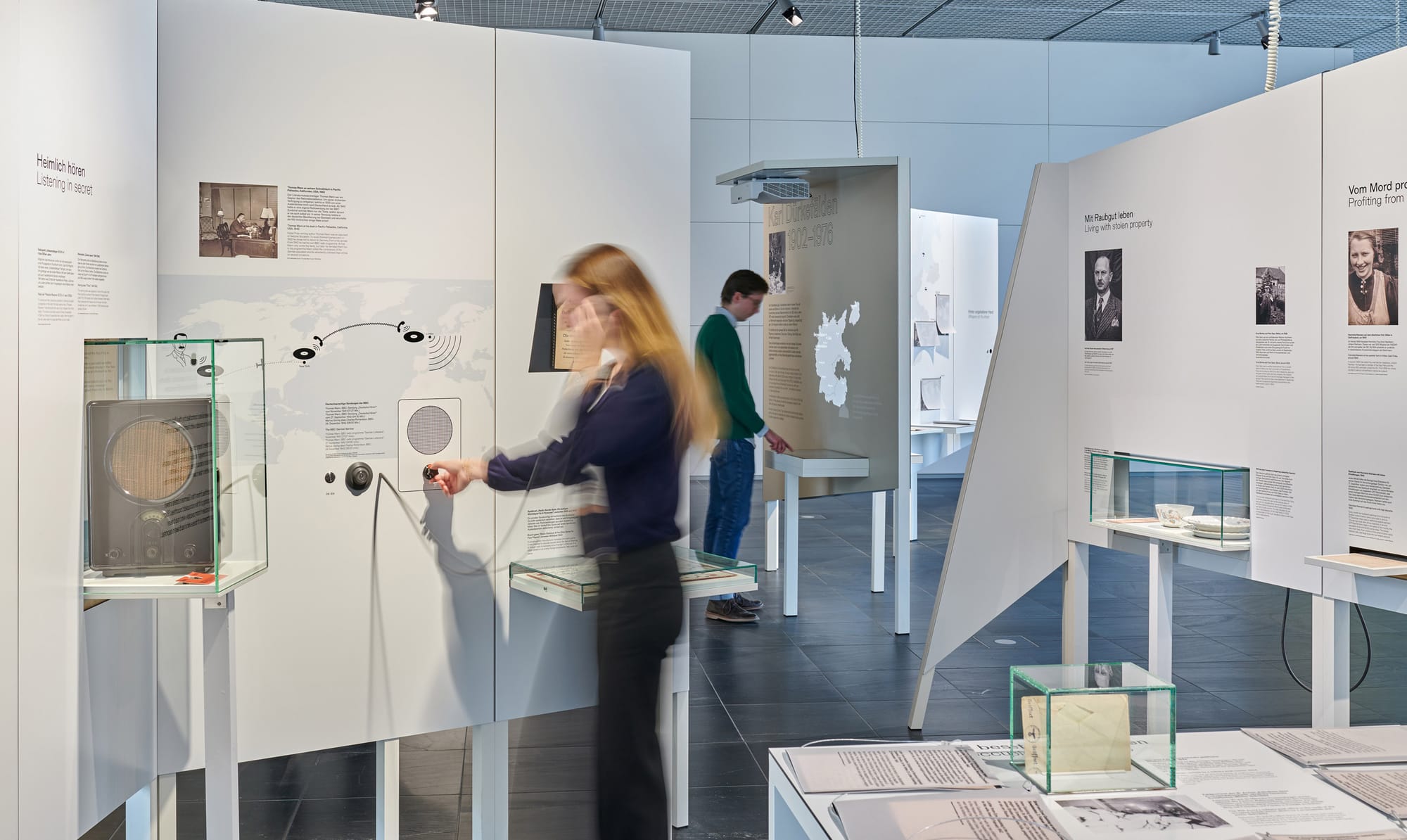
This was the subject of conversation with my friend Vern Thiessen, a Canadian writer friend of Mennonite descent, as we walked in the stifling heat recently to the Topography of Terror Foundation, a history museum and documentation centre on what was once the site of the SS Reich Security Main Office, which included the Gestapo, SD, and Einsatzgruppen headquarters. (A permanent outdoor exhibition in a trench outside the main building preserves the brick wall of the basement prison where opponents of the regime were interrogated and tortured by the Gestapo.) Vern and I were there to see a new special exhibition called The Holocaust — What Did the Germans Know?
Most of the Nazi death and concentration camps were built in the east in Poland—away from the eyes of ordinary Germans, ensuring a distance much greater than that of the Höss family. Yet the physical depiction in Glazer’s film made me wonder about the realities of an entire population living as neighbours to genocide, and the propaganda needed to perpetuate it. For all their talk of getting rid of “the Jewish problem”, the Nazi higher-ups knew most Germans wouldn’t be able to stomach the realities of Treblinka, Sobibor, or Belzec. So they were kept hidden, more or less.
Vern had brought his father here in the late 90s. As a 16-year-old Mennonite who fled Ukraine to avoid fighting for Stalin, he worked for the Wehrmacht as a courier in Berlin. Vern asked his father on numerous occasions what he had seen and known. He was always met with silence: his was the generation that said nothing. When he took his father to the Topography of Terror—an excursion his father suggested—he took in a lot. It sank in slowly with every list, photo, event, until his father was exhausted by the truth of it all. He needed to go back to the hotel.
In a way, the exhibition tries to do the impossible: reveal what Vern’s father witnessed, thought, and experienced. To uncover what an entire population knew or didn’t know is difficult since there is no reliable census data to navigate. The museum honours this reality by dividing the exhibition into three sections: “Propaganda”, “Indications in Everyday Life”, and “Putting the Pieces Together”. It is a journey from the general to the intimate.
In laying out the propaganda that worked so hard at burying the genocide of Jews, Roma, the disabled, and queer, the show illustrates what the Nazi regime released to the public through the media of its day. Ads in newspapers pleaded against “Jewish Bolshevism”; articles portrayed Jews as dirty, criminal, and lazy, helping fuel collective hatred and animosity. Articles about “Jewish resettlement”—the euphemism for deportations—were few and far between. Newspapers only hinted at the deportations from Germany, whereas deportations from other countries in Europe, like Slovakia, contain specific numbers. In one article penned by Joseph Goebbels in 1941, he referred to a “gradual process of annihilation.” In this way he justified the deportations without mentioning them explicitly. He also set out rules for how to behave toward the remaining Jews. The article was reprinted many times and read out on the radio.
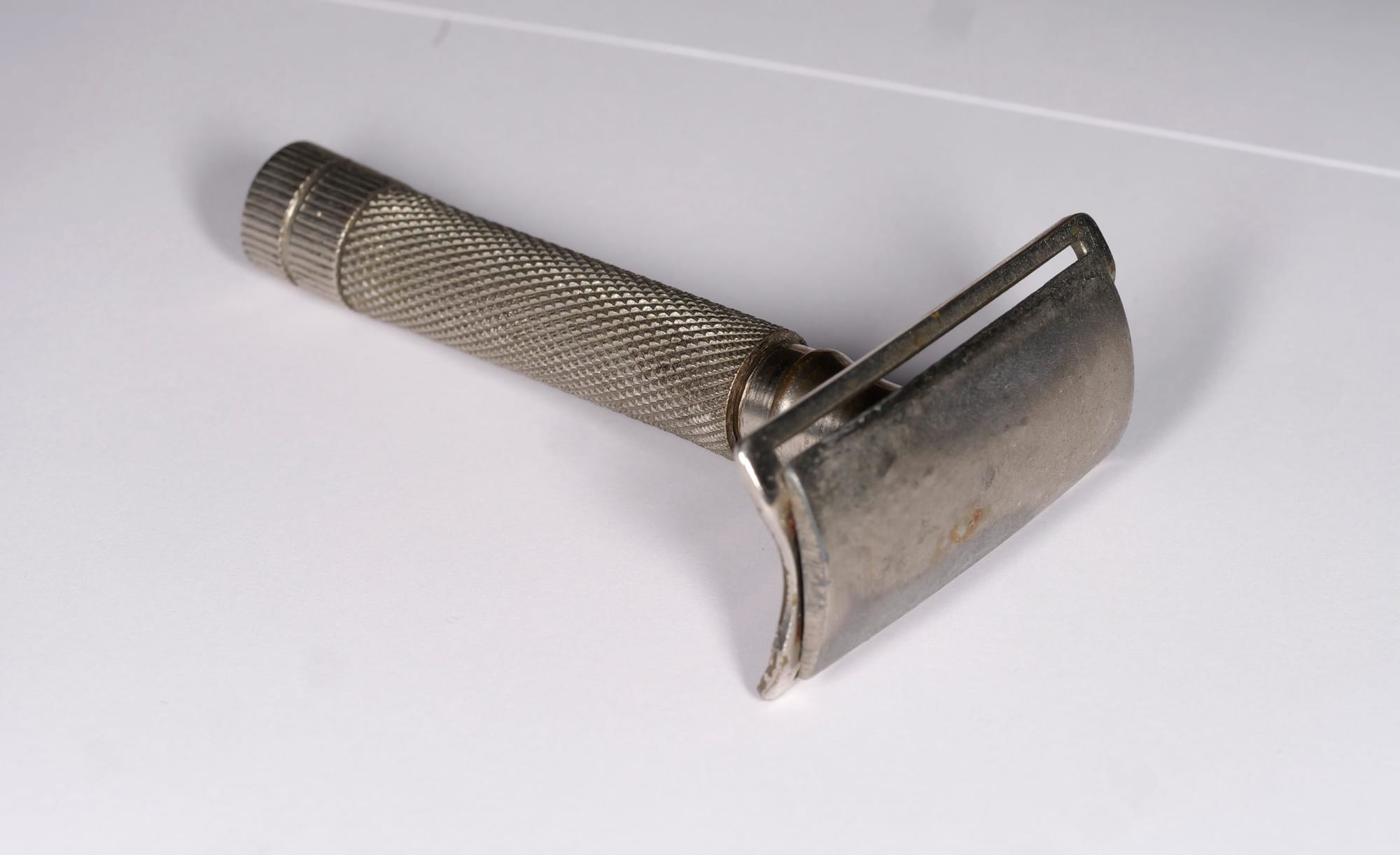
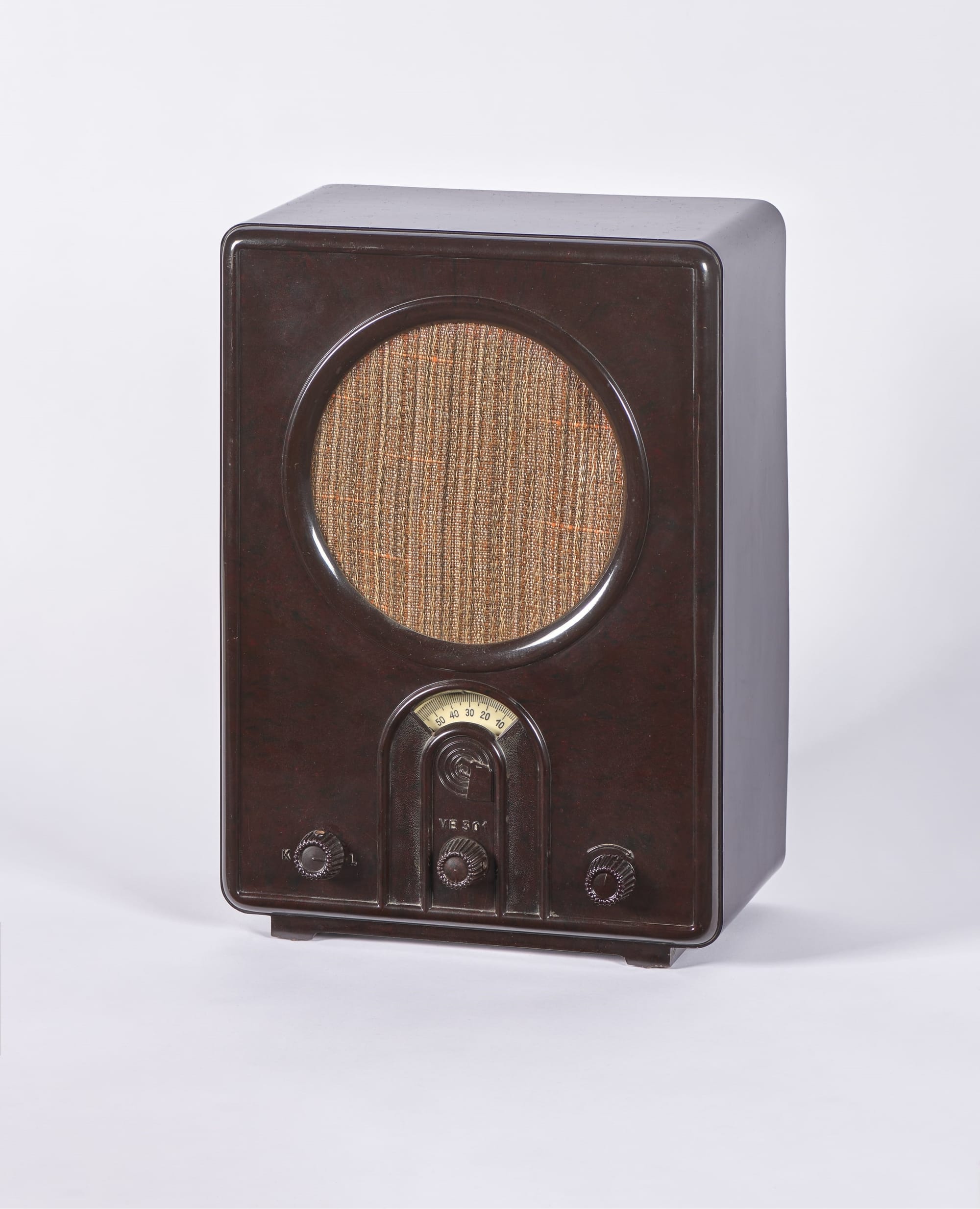
From left: Razor with secret compartment, pre-1945, likely used to smuggle microfilm from Poland to London (© The Polish Institute and Sikorski Museum, London, photo: Ludomir Lasocki); mass production of radios like the Volksempfänger VE 301 w, or "People's Receiver", were critical to the Nazi's propaganda efforts (© Photo: Topography of Terror Foundation/Sebastian Eggler.)
“Indications in Everyday Life” is the second part of the exhibition, and it is here the screws start to tighten. The horror is in the details. Under the subheading “Living with Stolen Property”, a dining set left behind by the Ganz family when they were deported to Auschwitz was auctioned off on August 18, 1941, for a pittance to Dr. Karl Held, a primary school teacher who knew the Ganz family. The flower-decorated porcelain plates are in perfect condition, a small crack in the bowl. They’re practically ready to be eaten from. In 2023, a descendant of Dr. Karl Held decided to share the porcelain set with descendants of Felix Ganz.
Nearby, almost easy to miss, are documents from the Kori firm—a Berlin company that manufactured and installed crematorium ovens in the camps. A 1940 invoice records engineers logging 52 hours of installation work at Flossenbürg concentration camp, during a two-week period when roughly 30 prisoners had perished there. A 1944 letter from the firm to the commandant at Lublin offers advice on optimizing the cremation process to save fuel: the ashes of individuals would no longer be kept separate. Kori would go on to supply crematorium ovens to 30 concentration and extermination camps. The engineers who installed these ovens were bound by confidentiality agreements once they left the camps. The documents are corporate in tone—invoices, proposals, confirmations—which is what makes them so upsetting.
The exhibition walls seem to close in on each other, weaving a tighter and tighter circle as you go deeper into the facts. Most affecting is the third section, “Putting the Pieces Together,” which makes the most uncomfortable argument: for those willing to put the pieces together, a clear picture of the crimes was available. On display are three diaries kept by ordinary German citizens with varying reasons for recording what they observed. Two of them define the exhibition’s moral terrain by inhabiting opposite poles of knowing.
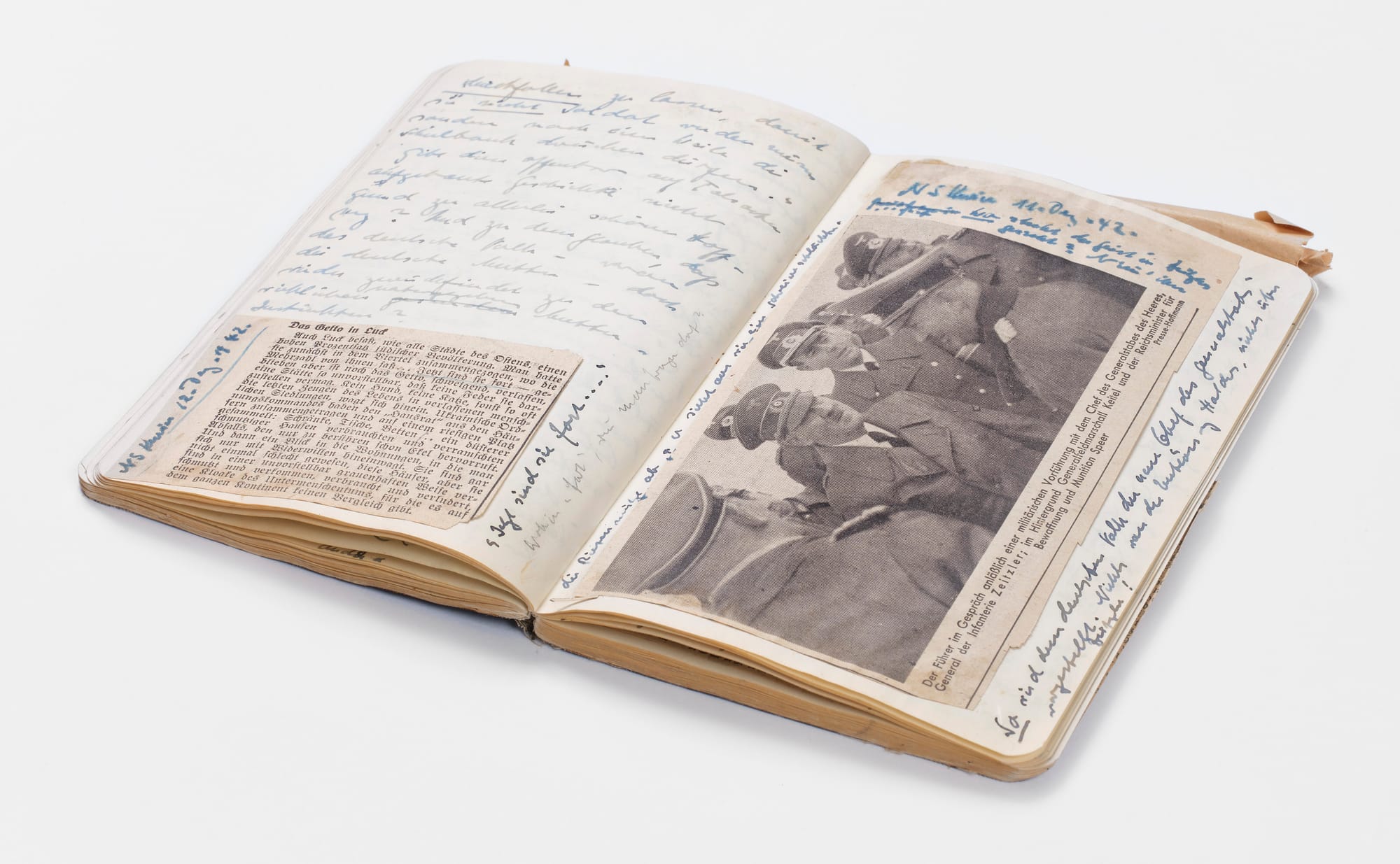
The first belongs to Anna Haag, a Social Democrat from Stuttgart who kept 20 diaries during the war. A peace campaigner since the First World War, her political activities made it hard for her to publish under National Socialism. What she produced instead was something more urgent: a compendium gathered from tradesmen, soldiers she met by chance on trains, overheard conversations on the street. She hid her diaries in her coal cellar for fear of denunciation. To even speak of the truths she was recording warranted jail.
What is remarkable about Haag’s diary is not only what she knew, but how early she knew it, and how the knowledge accumulated inside her. As early as December 1940, she was noting how the word “extermination” had become a kind of religious spectacle, “uttered with such pride.” In November 1941, she was recording an SS man’s confession, relayed to her by a gas meter reader: that he had been ordered to shoot 500 Jews—women and children—in Poland, and that he “simply couldn’t do it anymore.” By December of that year, she was writing about Jews assembled at Stuttgart’s Killesberg Hill and transported east, asking: “Sometimes I feel as if I just can’t bear all this anymore... All of this is making me physically sick.” Instead of speaking out, Haag writes this down, as if documentation itself were the only act of conscience available. This leads to one of the core questions of the exhibition: if, as it appears from Haag’s diary and other accounts, most of the Germans knew what was happening, why didn’t they do anything?
The exhibition explains that those who were aware of the crimes often felt helpless and had limited opportunities for action. The Nazi regime and its system of terror were so firmly established by the start of the war that it was barely possible to organize resistance or even protest publicly. People could only assist the persecuted in secret and ran the risk of being found out and denounced, then persecuted themselves. However, the known cases of people providing assistance show that it was possible.
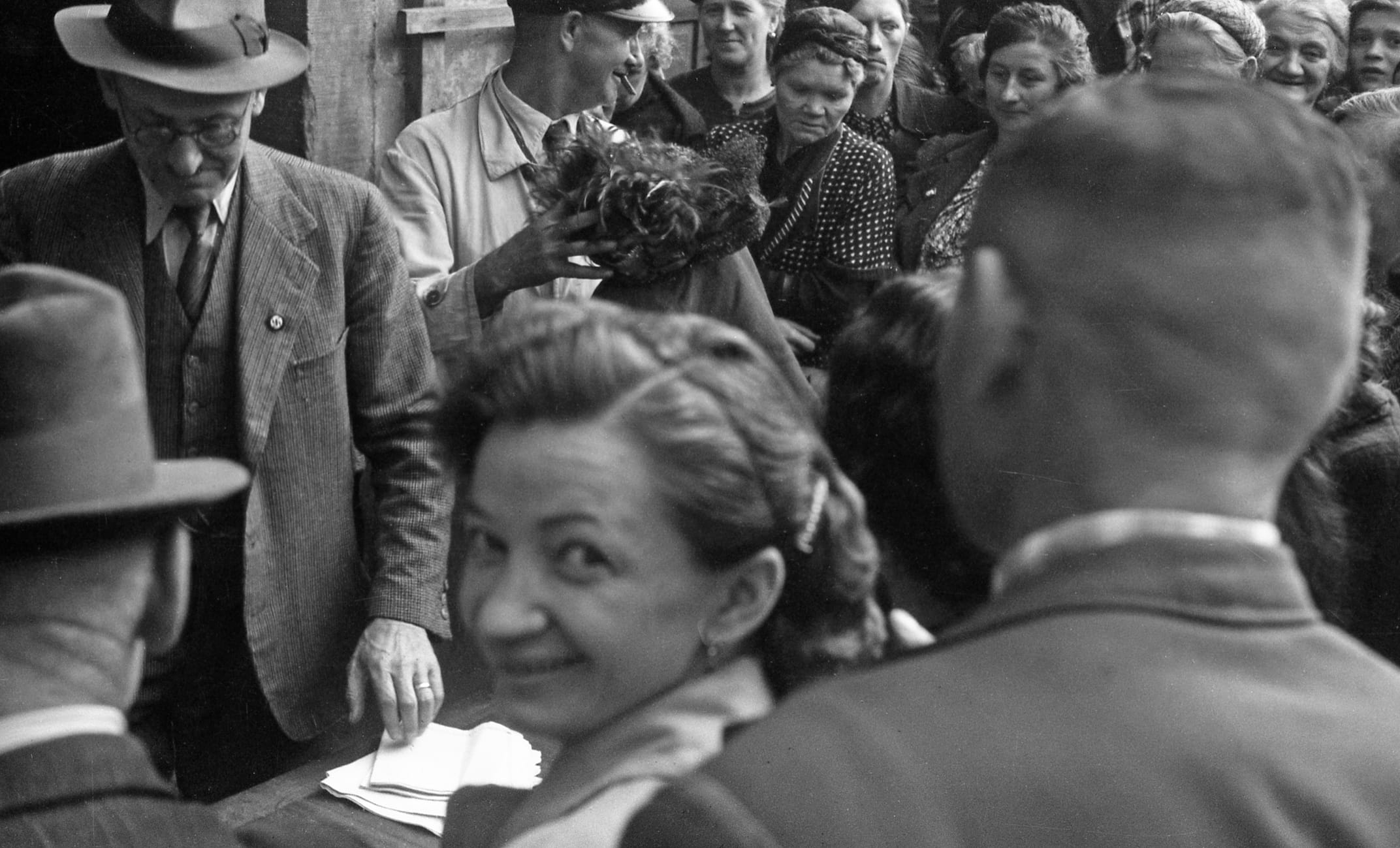
On March 27, 1945, as the war nears its end, Haag’s tone shifts from anguish to bitter irony. She writes about the “chameleons”—her word for those Germans who suddenly claimed they never supported the regime, never condoned the persecution of Jews, and never trusted “the painter”, the derogatory name Germans came to use for Hitler. Haag had watched her government and fellow citizens carry out the crimes, or look away while they were carried out. Now she was watching them rewrite the memory of having done so. As the exhibition tells us, Germans also did nothing because many benefitted directly from what was happening, the Ganz plate set sitting on a neighbour’s table is but one small example, while others simply refused to believe the scale of what was occurring. We see this attitude in the second diarist, Paulheinz Wantzen.
If Haag represents the anguish of a moral witness paralyzed by fear of a terror state, Wantzen represents something harder to look at: the failure of moral accountability. A journalist and editor for a Münster newspaper, Wantzen joined the Nazi Party in 1933 and shared its antisemitism. He worked directly for the propaganda machine. For a time he served as an informant for the SS Security Service. He collected Allied airborne leaflets and glued them into his diary, dismissing them as propaganda— as they documented exactly what his own regime was doing. Even on April 22, 1945, with Allied forces liberating Buchenwald and Bergen-Belsen, and radio reports circulating about camp conditions, Wantzen writes, “Everything in me does not want to believe it. And it will be difficult to persuade me.” Wantzen is Lifton’s doubling personified: not the absence of knowledge, but the active refusal to let the two selves meet.
At the exit, visitors are invited to weigh in on the question the exhibition has been building toward: Did the German population under National Socialism bear a share of responsibility for the Holocaust? Two sides of a whiteboard, divided by a line, Yes or No. Coloured Post Its and pencils for anyone who wants to answer.
I stood there longer than I expected. People had written in multiple languages, in careful and careless handwriting, in anger and in grief. “Silence = compliance” one note read. A longer note argued that propaganda had reshaped minds so thoroughly that complicity was almost structurally inevitable, then caught itself: “This is not an excuse.” Someone else had written, in capital letters, as if stating the only thing that could be said with certainty:
NO OPINIONS ARE RIGHT IF WE DIDN’T LIVE THROUGH IT
I don’t know if that’s moral humility or moral abdication. Perhaps both. Perhaps that ambivalence is the most honest thing the exhibition produces, not an answer, but the lived weight of the question. Vern’s father couldn’t look at the photographs. Wantzen couldn’t believe the reports. Haag hid her testimony in a cellar and asked, over and over: Where is God and his mercy? What we do with what we know, and what we do to avoid knowing it, remains, 80 years on, the enduring question.
Share this post