You’d Meet at the Square: The Toronto Outdoor Art Fair at 65
From rave buses to Art Nest, Nathan Phillips Square is where Toronto has always gathered. Josh Greenblatt on sixty-five years of the Toronto Outdoor Art Fair and its founding idea that art is for everyone.
Kalmplex came of age at the peak of Toronto’s rave scene, one of thousands of kids who found creative community in the city’s mega-clubs, underground venues, and DIY spaces. “You’d get a flyer. You’d meet at Nathan Phillips Square. You get on a bus with either the friends you came with or people you didn’t know,” says the multidisciplinary artist, who was born and raised in the city. “A yellow bus drives you out to some airport hangar and you’re in this six-, seven-room party where every room had a distinct theme.” The city was cheaper, scrappier, and more social then, and the same conditions that let artists connect let them create: affordable studio space, independent galleries, DIY venues. But rapid commercialization, declining arts funding, and fewer arts programs have made the city less hospitable to artists and reinforced the idea that art is only for the few.
For sixty-five years, that same square where Kalmplex and his fellow ravers boarded the buses has hosted the Toronto Outdoor Art Fair (TOAF), a vital link in the Canadian cultural ecosystem, making art accessible and affordable for all. The fair is held every July, bringing together about three hundred artists across career stages and creative disciplines, from ceramics to dance to installation. Public attendance is free. Holding Canada’s largest and longest-running outdoor art fair in the biggest public square in the country advances an important message: that art is for everyone. “I think it’s important that people realize that art is important to the better of society and people,” says Kalmplex, who has participated in TOAF three times. “The more that we invest in artists and people, the better that our society will be.”
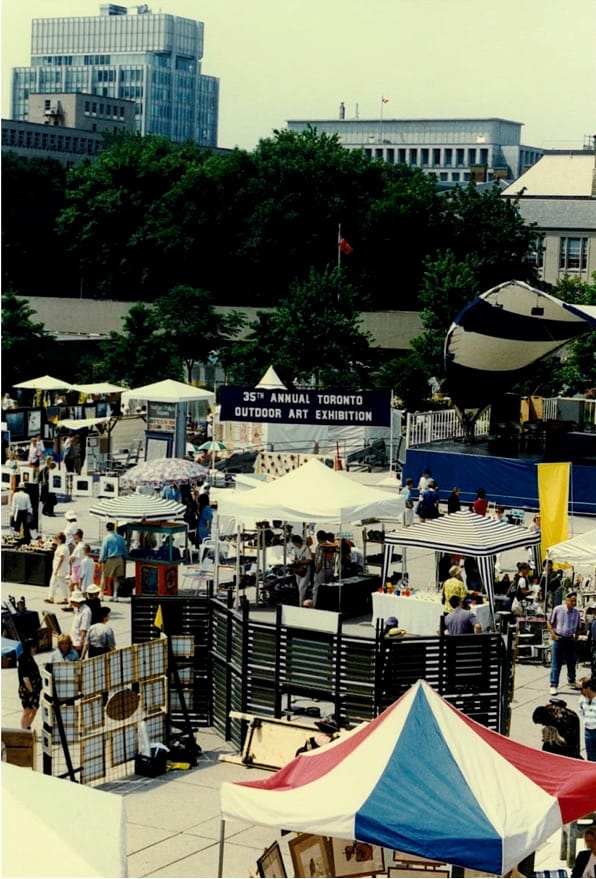
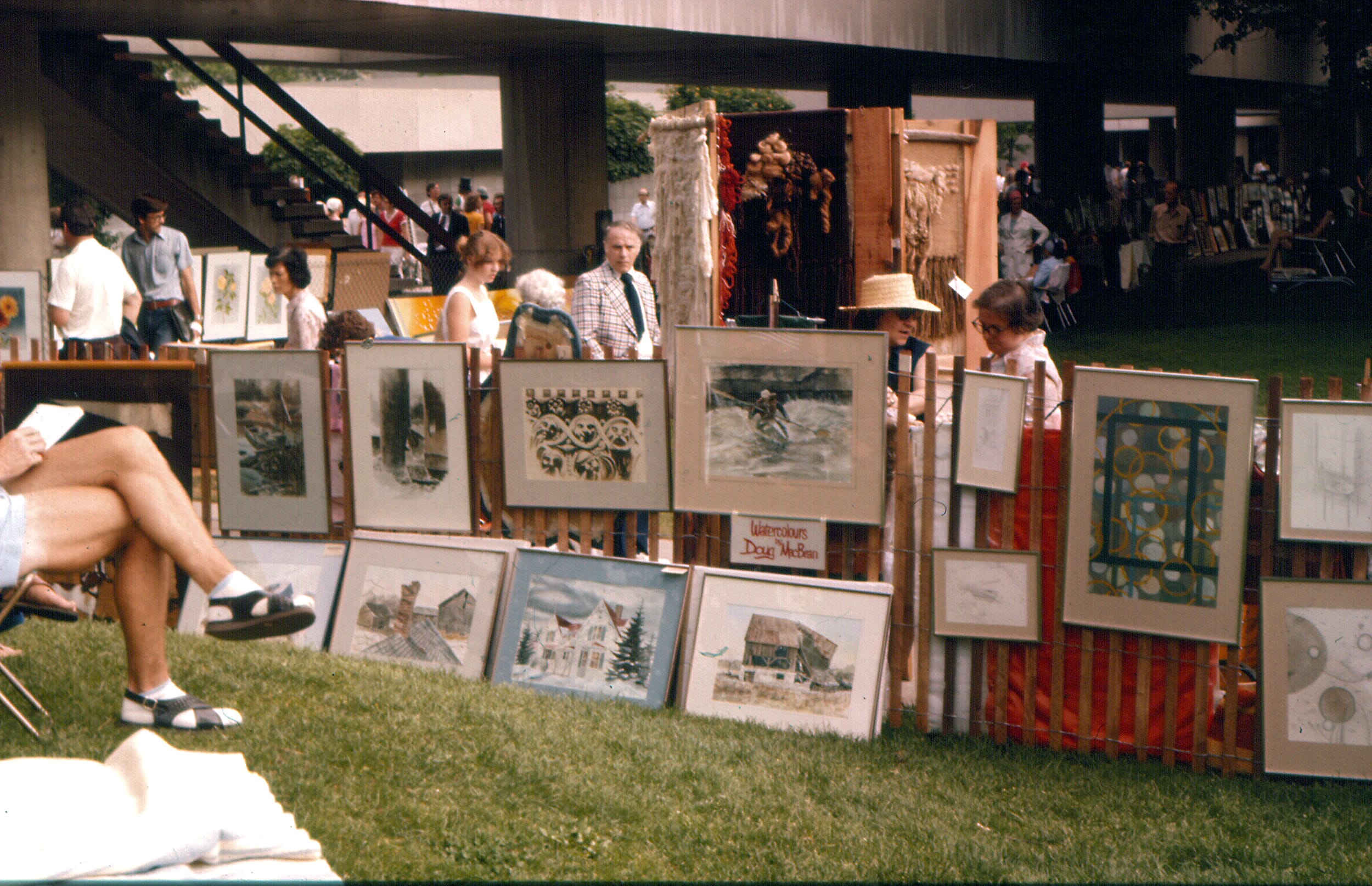
TOAF was the brainchild of Murray and Marvelle Koffler, who in 1961 teamed up with Alan Jarvis, the former director of the National Gallery of Canada, and the artist Jack Pollock to hold the first fair in the parking lot of the Four Seasons Motor Hotel. They moved the event to Nathan Phillips Square four years later, where it’s been held ever since. TOAF was strictly an in-person affair until the pandemic, when the board saw an opportunity to bring it online and expand its presence to artists and audiences across Canada. “It feels like we got this gem that was a little bit dusty, and we just polished it and made it shine,” says anahita azrahimi, who has been TOAF’s executive and creative director for the last decade. That decade handed her the fair’s hardest problem: keeping an outdoor art fair alive when gathering outdoors was, for a moment, forbidden. In six weeks, the team built a digital platform to launch TOAF online and sold one thousand works, a milestone azrahimi is especially proud of. Today, about seventy artists from across the country join the fair online every year. Both milestones — the fair’s sixty-fifth year and azrahimi’s tenth — were marked at Koffler Arts with Don’t Look Back, an exhibition curated by David Liss.
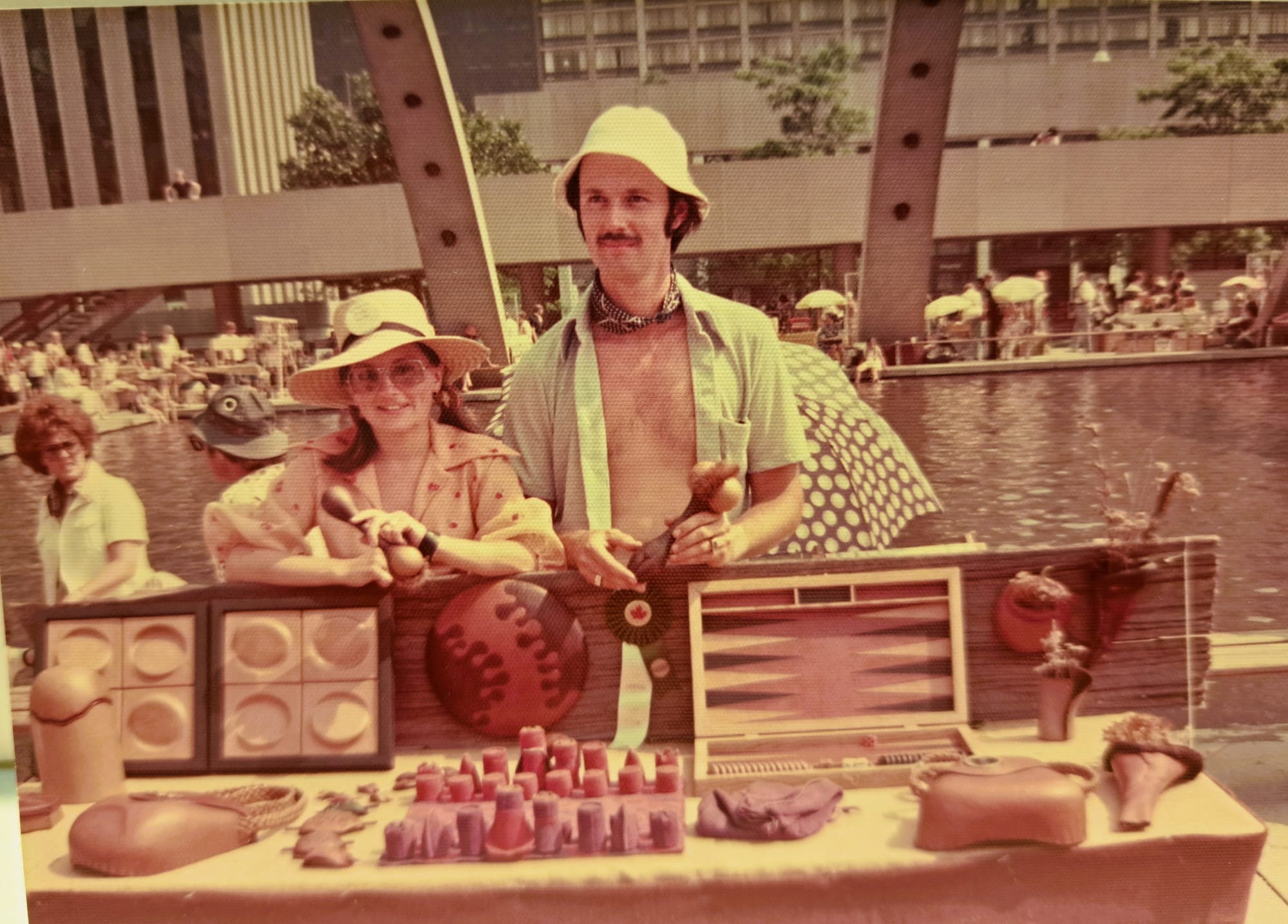
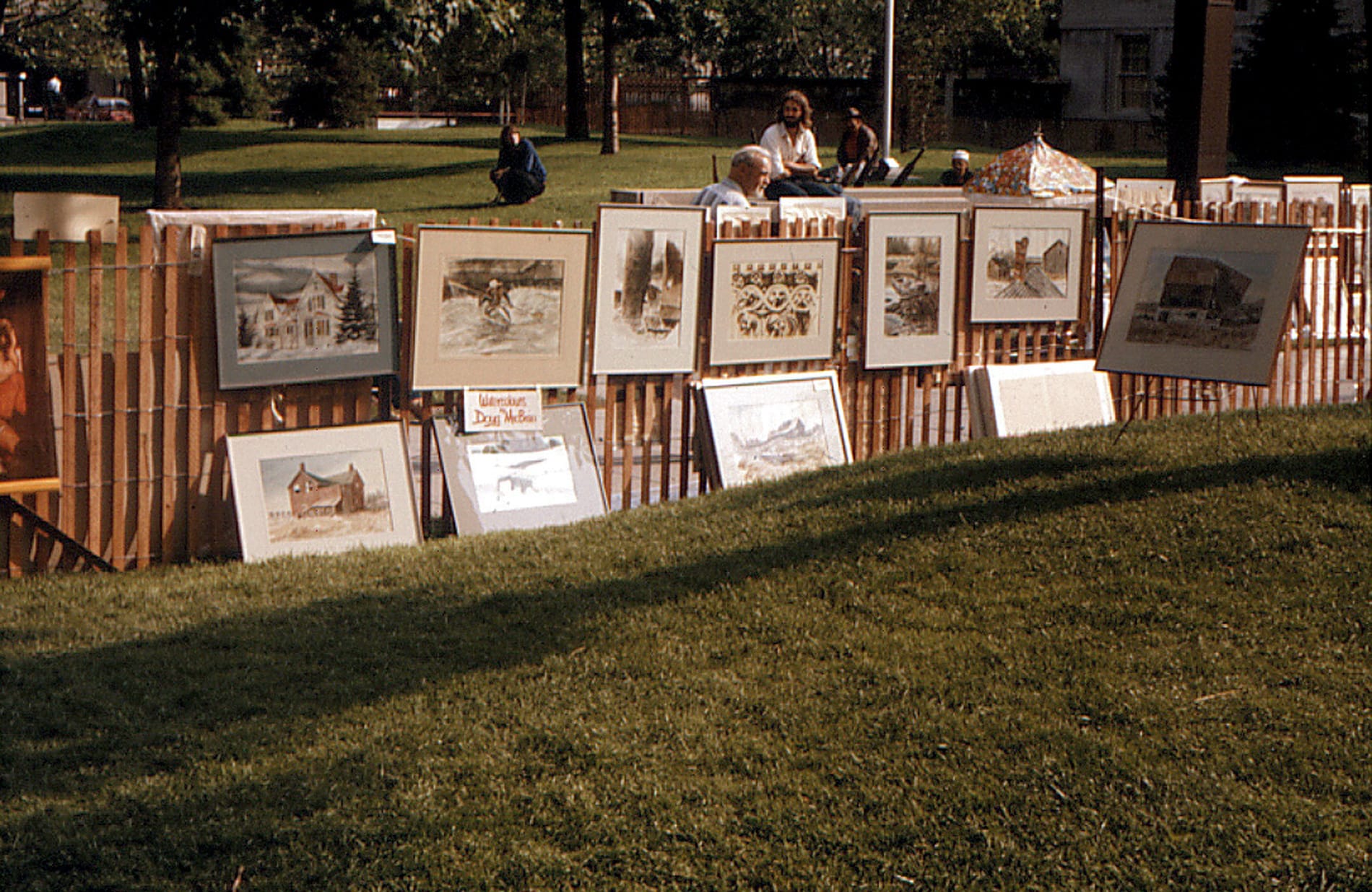
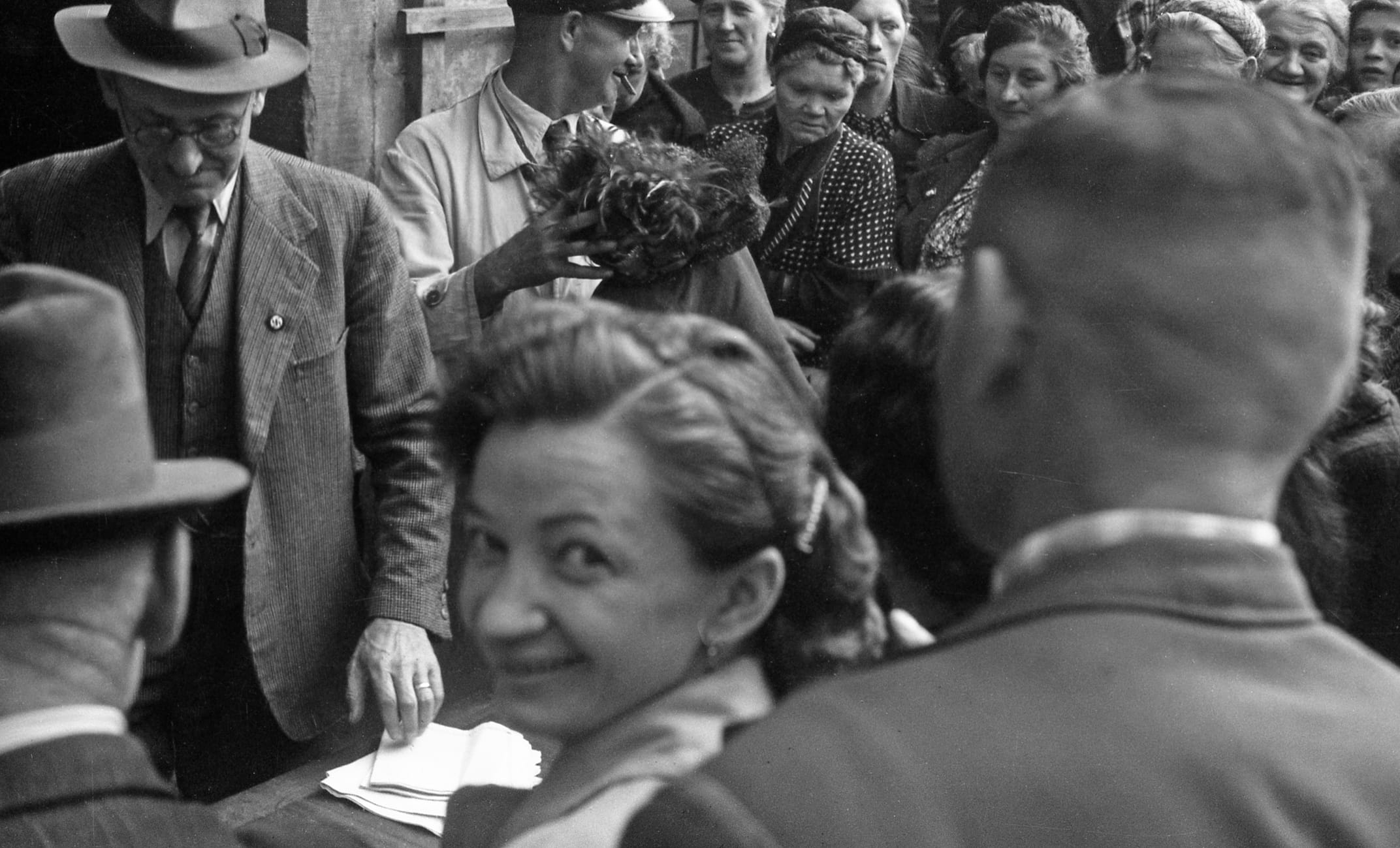
The festival over the years. Courtesy TOAF.
For the sixty-fifth anniversary, azrahimi invited Rui Pimenta to curate Art Nest, the fair’s art incubator program. (Pimenta calls it a “testing ground” that helps expand what public art can be beyond “notions of monumentality and permanence.”) He commissioned work by senior artists exploring what career longevity means, after hearing their concerns over opportunities drying up as they age. “Sixty-five is a year that we typically associate with retirement,” says Pimenta. “The idea of retirement is not something that is quite as available to [artists] as it might be to people in other professions who have a pension to rely on.” In Passing On, Max Dean gave away more than 1,400 paintings, drawings, and journals from the private archive of his late wife, the artist Martha Fleury. Fairgoers took them home as trustees committed to caring for them. In Mirror, Mirror, Ed Pien installed twelve antique vanities with mirrors displaying meditative texts about the passing of time. “Everybody loves supporting emerging artists,” azrahimi acknowledges, noting that visionaries like Ed Burtynsky and Barbara Astman each participated in TOAF as students. “You never know who’s going to be the next Canadian art star. Sometimes it takes 10 years, 20 years, or 40 years. But give it time.” The fair is also deliberate about the other end of an artist’s trajectory: “We are also very conscious to celebrate the seasoned artists who poured their hearts and souls into their careers.”
The challenging environment makes the career trajectory for working artists seem impossible, azrahimi notes. In Toronto, dwindling affordable housing and studio space are squeezing artists as galleries, festivals, and arts organizations shutter — the fate already met by The Guvernment, Fez Batik, and the artist lofts at 888 Dupont. These are the most visible reverberations of the hyper-commercialization reshaping the art world, dominated by a few mega-galleries (like Gagosian and David Zwirner) and private auction houses that mint blue-chip artists at the expense of emerging artists. Meanwhile, a 2025 report by the Canadian Chamber of Commerce found that federal arts funding has declined as a share of federal spending, despite the sector growing faster than key industries like construction and manufacturing.
TOAF offers artists networking opportunities with corporate buyers, including music and publishing executives looking for an artist to design an album or book cover, and real estate developers commissioning work for major projects. “We look at it as a co-op,” says azrahimi. Artists pay a small fee to set up a booth, and in turn, get access to community, mentorship, and networking opportunities that support their practice.
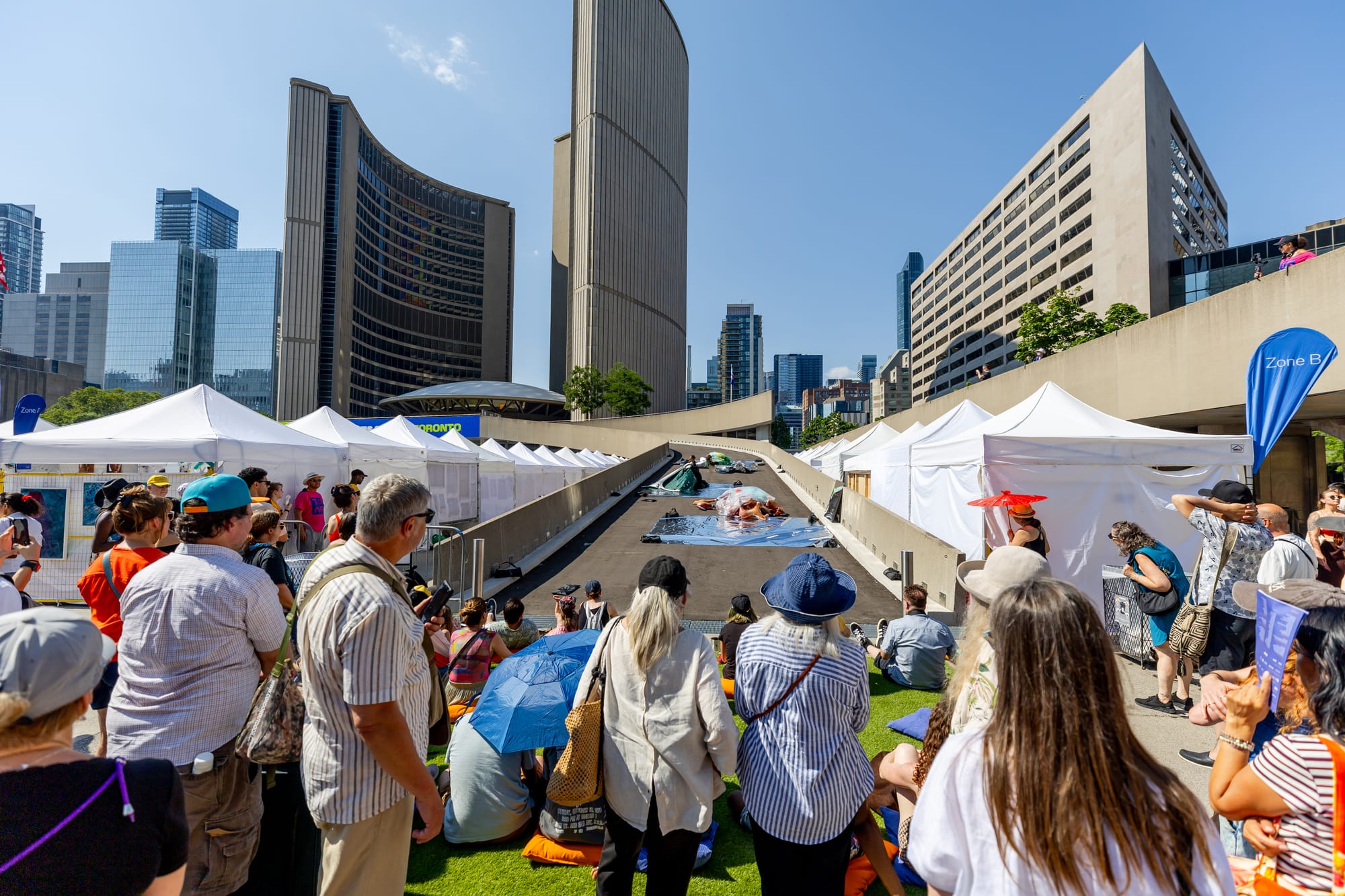
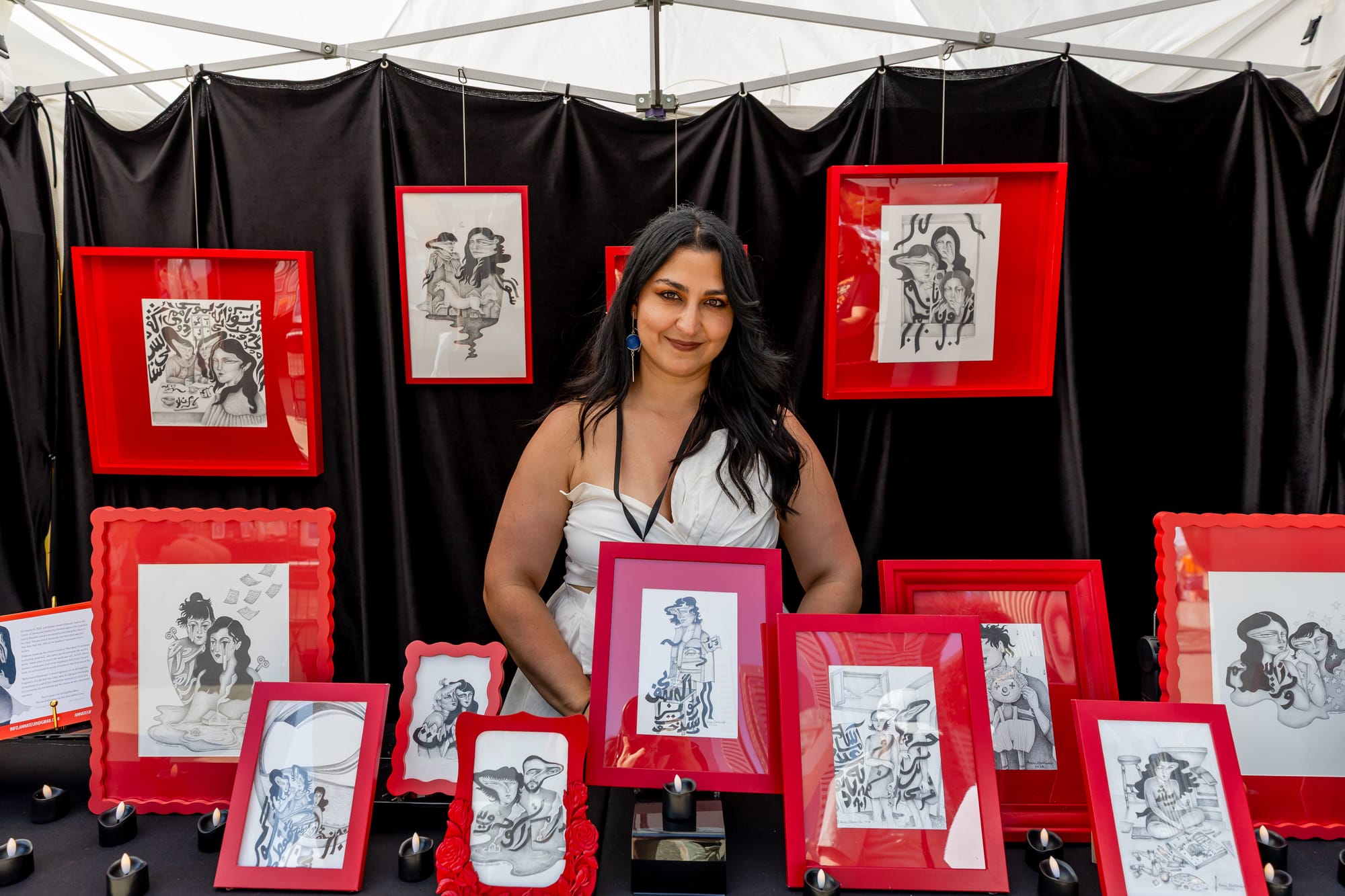
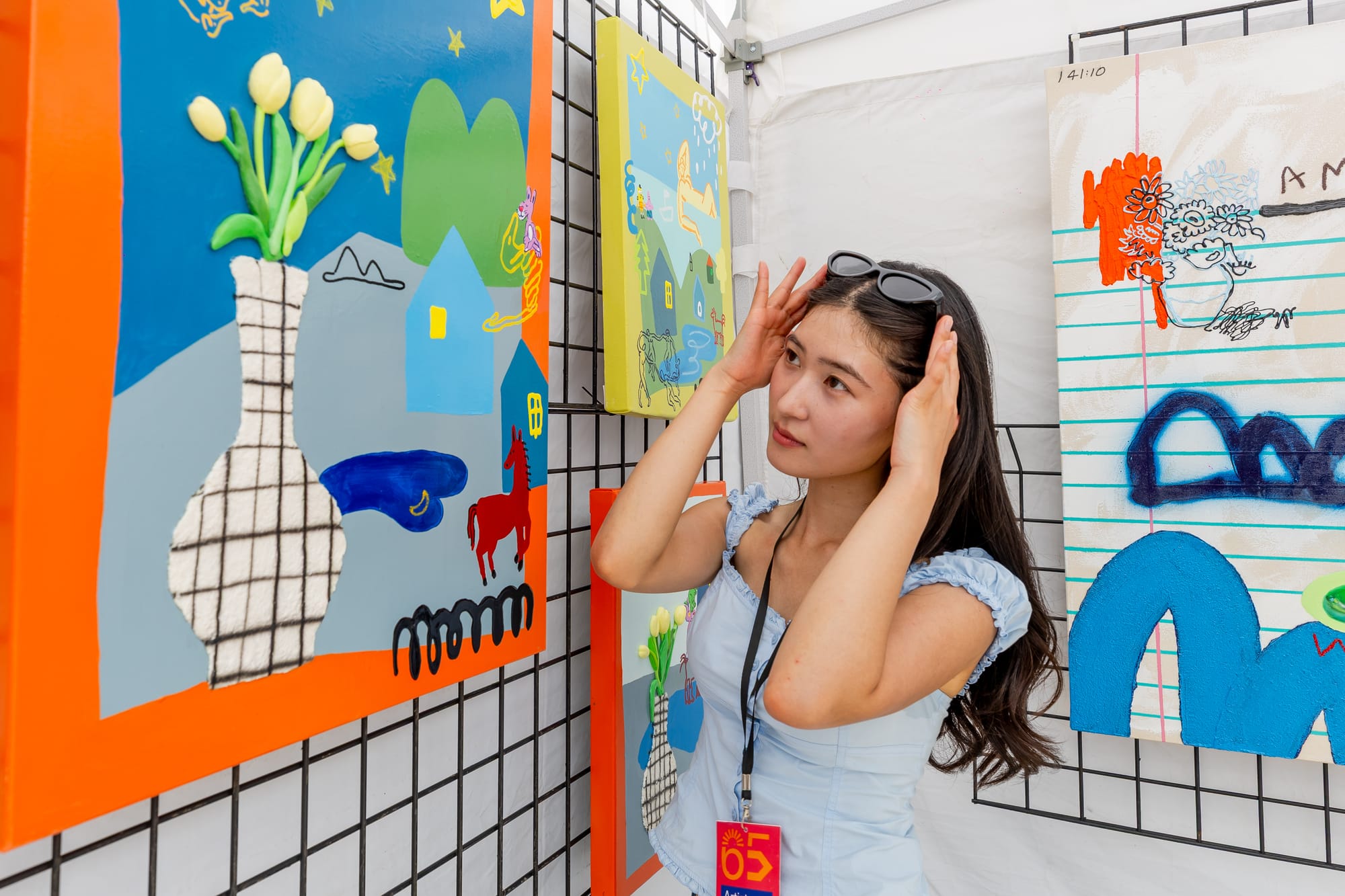
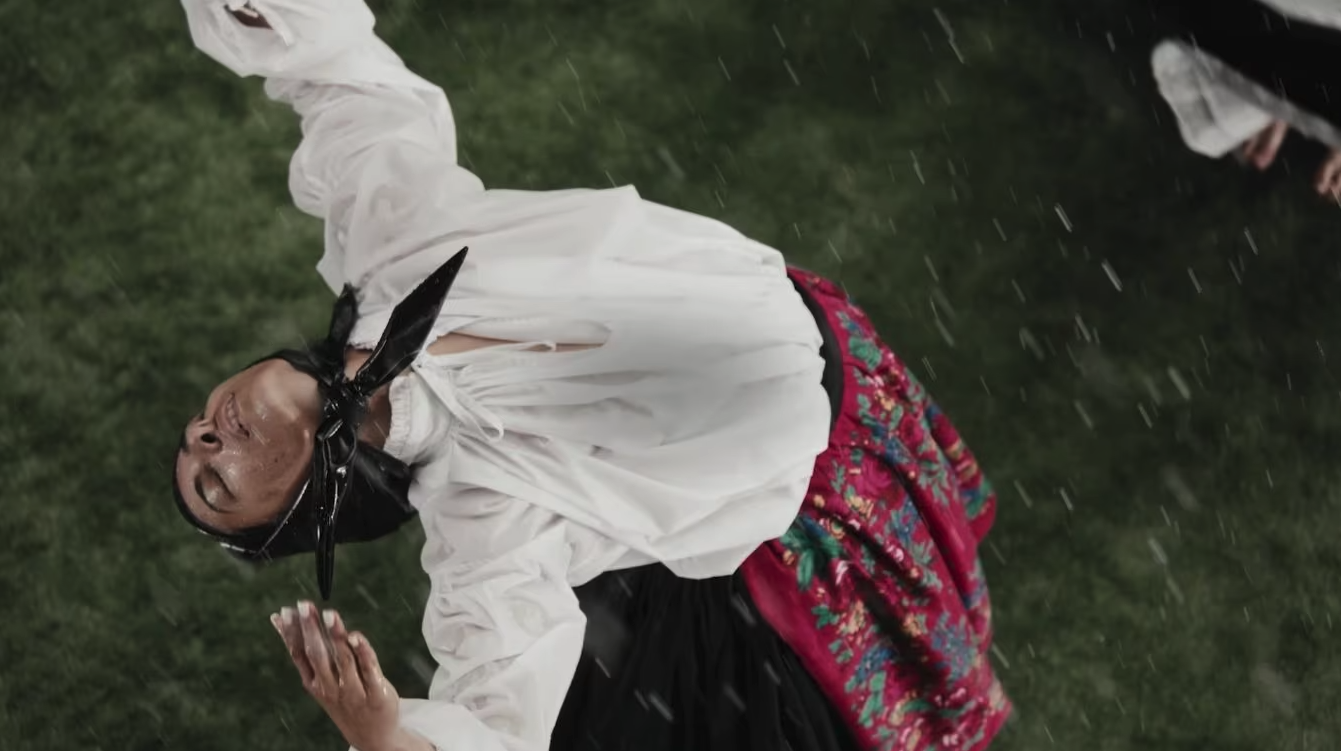
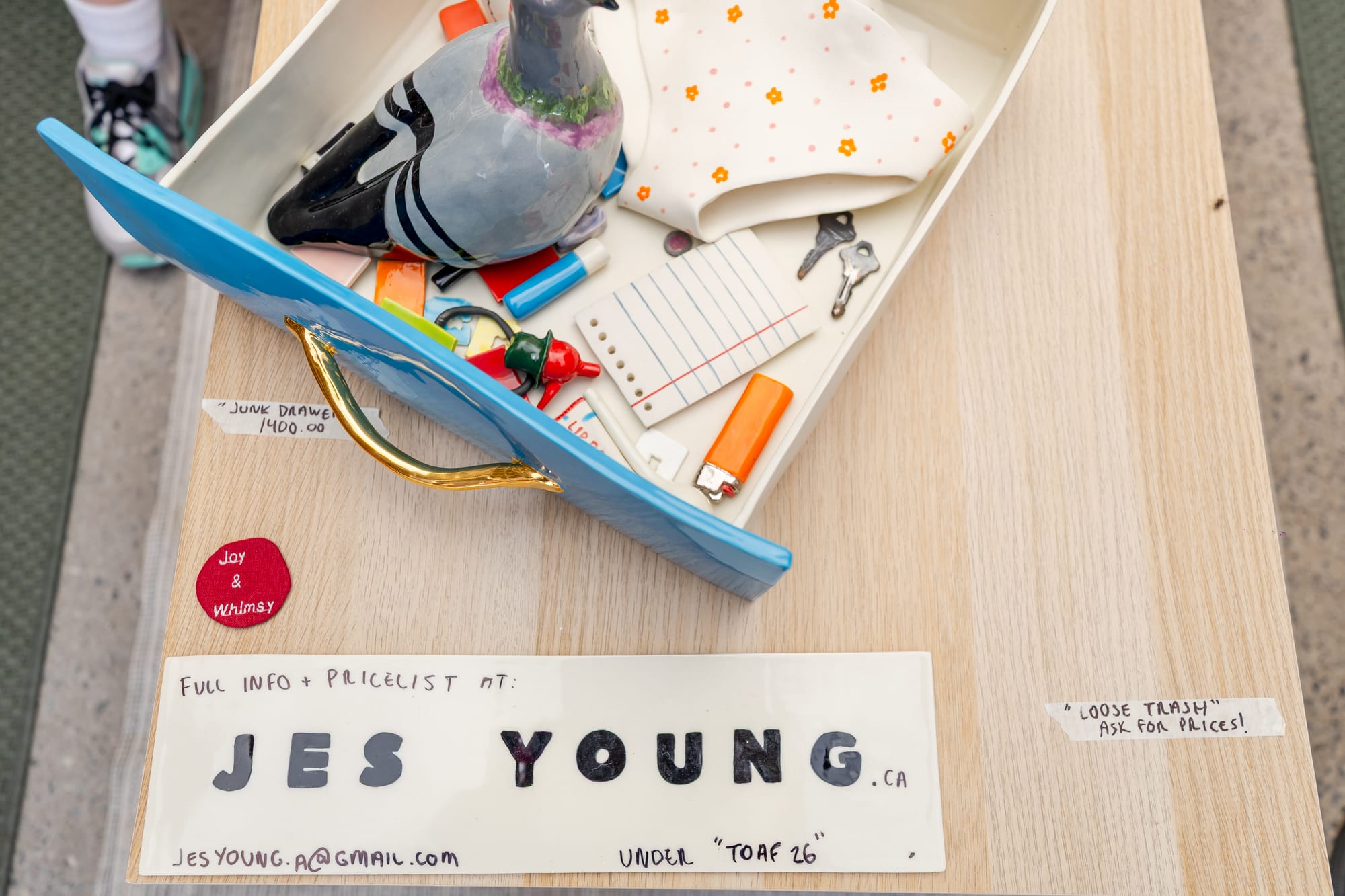
Images from TOAF 26. Photos by Marlowe Porter.
The ceramicist Jes Young first participated in TOAF last year through Art Nest. “In making the piece, it just felt like I actually had some support, even if it was just asking a question and someone finding the answer,” says Young. “Everybody really wanted to see this show be brought to life and have legs.” This year, for their playful scenes of quotidian city life, including discarded ketchup packets and pigeons, Young won the Gallery 1065 Award for Distinguished Achievement in the Advancement of Joy & Whimsy, which recognizes an artist whose work makes people laugh and reminds them why they come together for art fairs in the first place.
“Even if you don’t have cash on you or times are tough, you can still go and enjoy and see performances,” says Young. “You can meet artists. You can talk to people. I just think it’s so wonderful that they’re trying to make sure that everybody has the chance to participate, take part and enjoy.”
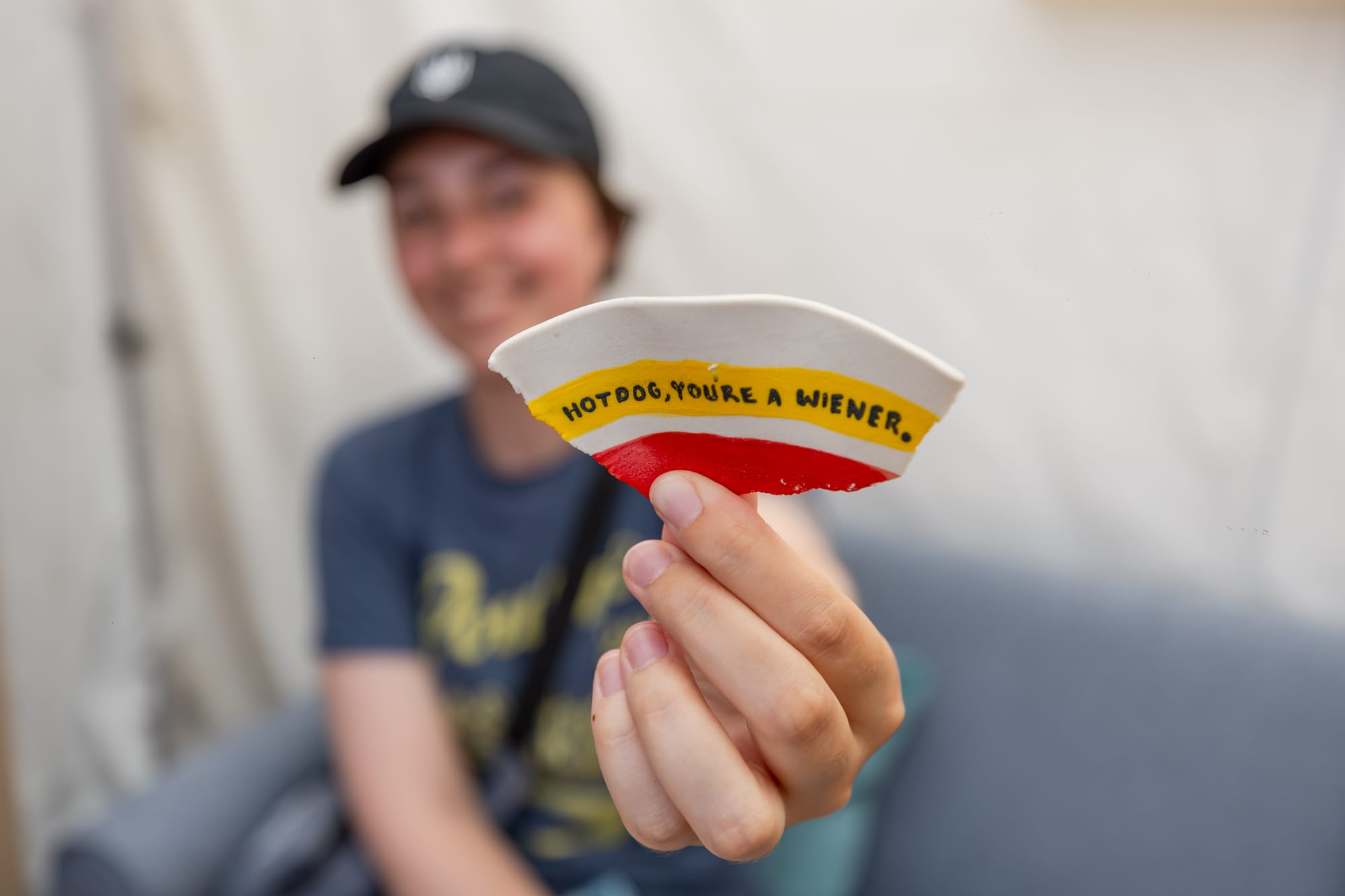

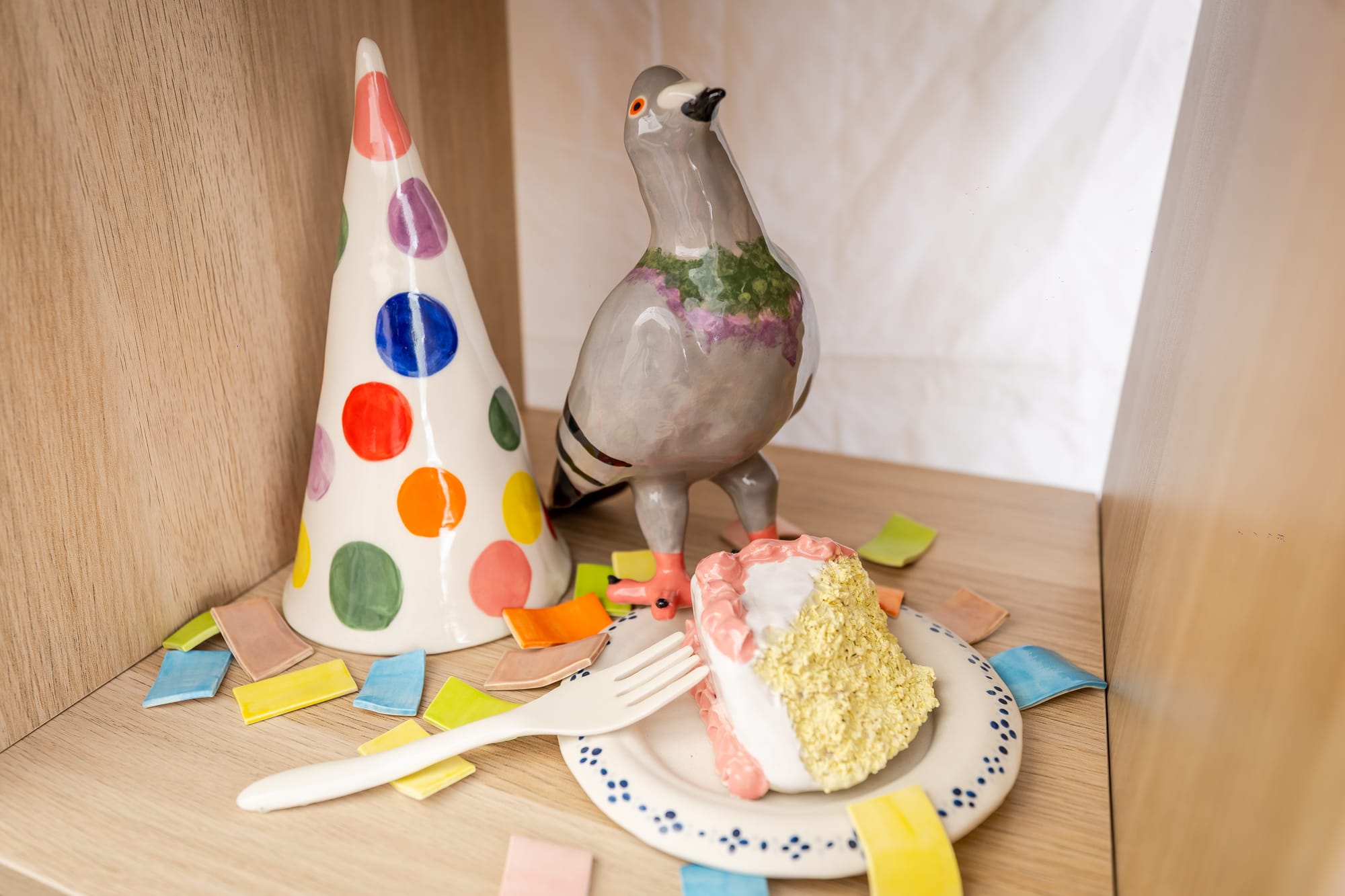
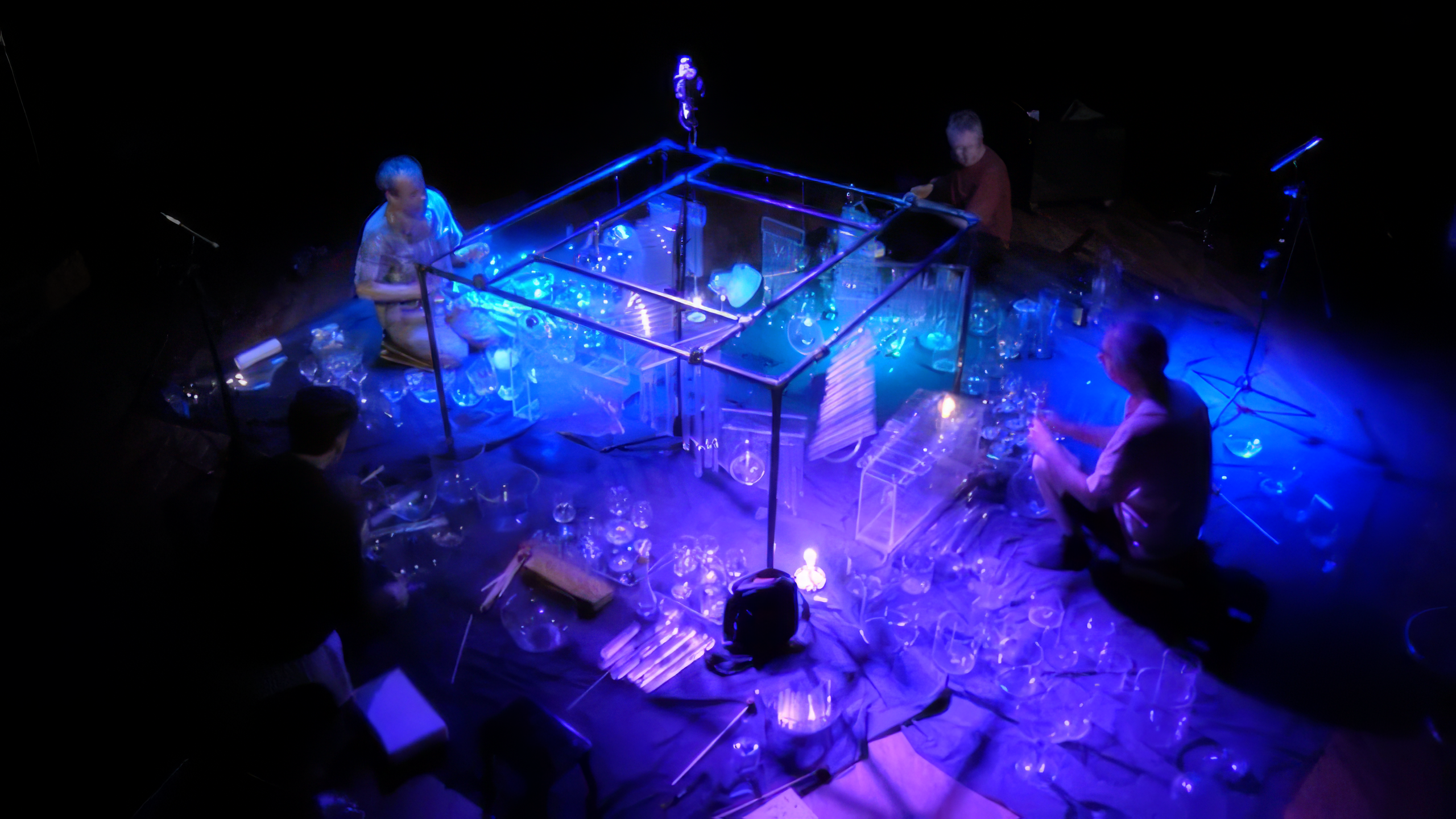
Images from TOAF 26. Photos by Marlowe Porter.
Share this post